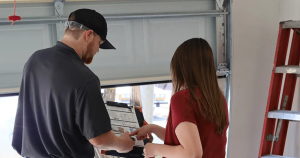

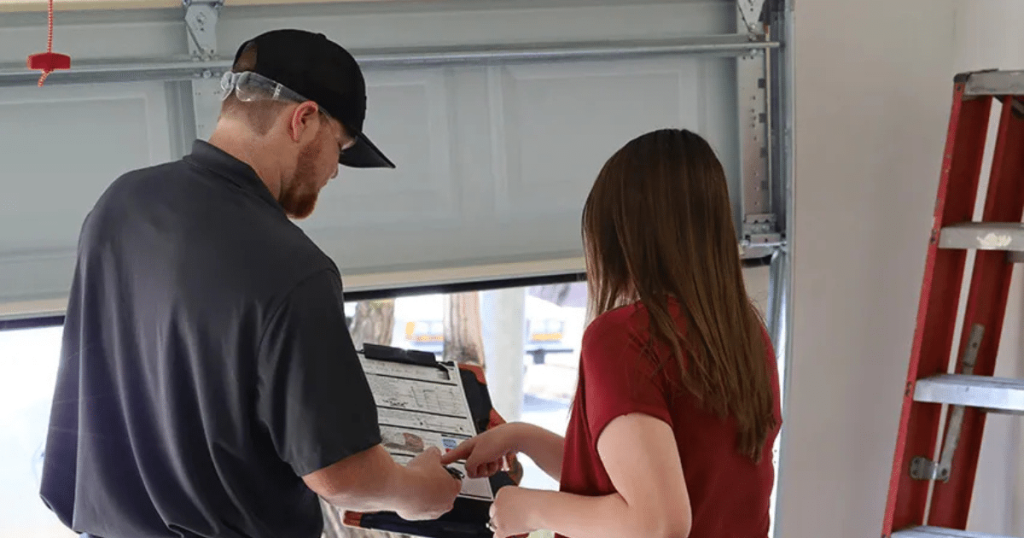
A complete estimate includes the scope of work, parts and materials, labor charges, service call and diagnostic fees, warranty terms, and payment terms. Itemized lines show exactly where repair costs come from, so you can question, understand, and approve the final number before any work starts.
Reading a garage door repair estimate line by line gives a property owner the information needed to approve or question each charge with confidence. This guide breaks down each estimate line, what it should state, and the questions worth asking before approving any door repair.
Key Takeaways
- Itemized lines show exactly where the repair costs come from
- Parts and labor should each appear as individual lines
- Service fees and diagnostic fees belong on the estimate in writing
- Warranty terms define what is covered and for how long
- Written approval before work begins protects both sides of the agreement
Line Items on a Garage Door Repair Estimate

Garage door repair estimate formats vary by company, but each one should state the same core lines in plain language before you approve the work.
| Estimate Line | What It Should State | Question to Ask |
| Scope of work | The repair or replacement being priced | Is anything excluded from the scope? |
| Parts and materials | Part names, sizes, and unit prices | Are the parts new or refurbished? |
| Labor charges | Hourly or flat rate and hours expected | What happens if the job runs longer? |
| Service call and diagnostic fees | Trip charge and inspection cost | Is the fee credited to the repair? |
| Warranty terms | Coverage period for parts and labor | Who handles a warranty claim? |
| Payment terms and timeline | Deposit, due date, and start date | When is payment due? |
Estimates that state each line in writing before work begins leave little room for surprises on the final repair bill.
Scope of Work
Scope of work defines exactly what the estimate covers, from a simple fix to garage door replacement, and it anchors every other line.
Clear scope statements spell out the following items:
- The type of repair, such as spring replacement or track repair
- Simple repairs, minor repairs, and quick fixes listed apart from larger tasks
- Extent of damage and any minor problems found during inspection
- Structural damage, full track replacement, or full panel replacement needs
- Items excluded from the work, such as paint or trim
To determine whether the scope calls for a repair or a new garage door, read our guide on Is Garage Door Repair or Replacement Cheaper in Niles?, which breaks down the deciding factors and price ranges for each option.
Parts and Materials
Replacement parts often make up the largest line item, and the estimate should list each part by type, size, and price.
Detailed part lines usually carry these details:
- Spring type, size, and cycle rating for any spring replacement
- Torsion springs and extension springs listed by name and size
- Broken spring components, drums, and brackets priced individually
- Garage door cables and garage door panel sections with unit prices
- Opener repairs or faulty opener boards named by model
To trace how spring type, panel style, and opener model move the price of each part, read our guide on What Factors Determine Garage Door Repair Pricing in Niles?, which explains what drives each line of a repair quote.
Labor Charges
Labor charges reflect local labor rates and the time a technician needs, and the estimate should state how that time is billed.
Labor lines gain clarity when they state these points:
- Whether the rate is hourly or a flat amount per task
- Expected hours for the repair and any minimum charge
- Cable repairs, including garage door cable repair, often carry flat rates
- Expert repairs on high-tension springs may carry a higher hourly rate
- Travel time and setup time included or billed on top
New parts installed through garage door installation should carry that labor on its own line, along with the hours expected and the rate applied.
Service Call and Diagnostic Fees
Service fees for garage door service cover the trip and the inspection, and they should appear apart from repair labor.
Fee lines should explain what each charge covers:
- Service call fees for the trip to the property
- Diagnostic charges for inspecting the door and testing parts
- Quick service call visits may cover diagnosis without any repair
- Return trip charges when ordered parts arrive after the first visit
- Credit toward the repair if the work is approved
Calls outside regular business hours for garage door emergencies carry higher fees, so the estimate should state the emergency service rate up front.
Warranty Terms
Warranty terms state what is covered, including safety features, for how long, and who handles a claim, so they belong in writing on the estimate.
Warranty statements should address coverage in these areas:
- Coverage periods stated individually for parts and for labor
- Garage door safety sensors covered after any realignment or replacement
- Professional garage door maintenance requirements that keep coverage valid
- Exclusions such as misuse, impact damage, or missing preventative maintenance
- Garage door specialists typically stand behind work with a stated period
Garage door opener coverage often follows its own terms, so the estimate should list that warranty period apart from the door itself.
Payment Terms and Timeline
Payment terms and timeline state the deposit, the due date, and the start date, which keeps the final repair bill predictable.
Payment details on a complete estimate include:
- Deposit amounts required for ordered or special order parts
- Due date for the remaining balance after the work is completed
- Accepted payment methods, including credit cards and checks
- Start date and expected completion time for the repair
- Taxes and disposal charges added to the total price
To check a final total against the average cost of the most common repairs before agreeing to payment, read our guide on How Much Does Garage Door Repair Cost in Niles, IL?, which lists typical ranges and their drivers.
How to Review a Garage Door Repair Estimate
Reviewing a garage door repair estimate takes only a few minutes, and a consistent routine flags omissions before work begins.
Thorough reviews follow these steps:
- Read each line and confirm every charge has a clear label
- Confirm the estimate covers all garage door repairs discussed during the visit
- Compare totals for common repairs against typical price ranges
- Request transparent pricing for any item that looks unclear
- Keep a signed copy of the approved estimate for the records
Following itemized estimate practices gives property owners a clear basis to approve or question each line before scheduling any work.
Clear Estimates Make Every Repair Decision Simpler

The scope, parts, labor, fees, and payment terms each deserve a clear place in writing before any repair begins and before any money changes hands. Property owners who read each line carefully avoid surprises on the final bill and approve work with genuine peace of mind about both the repair and the price.
MF Solutions lists the scope, parts, labor, and fees up front on each Niles, IL estimate, so every approval rests on clear information about the work and the price. Contact us or give us a call today to request an estimate and review each line with a technician, with time for questions, before approving any work.
Frequently Asked Questions
Is a written estimate legally binding?
Written estimates are usually non-binding approximations, while a signed contract for a new door or a fixed quote carries firmer commitments. Asking whether the number is an estimate or a fixed quote clarifies how much the final repair bill can change.
What happens if the final bill is higher than the estimate?
Reputable companies explain any increase before starting additional work and ask for written approval of the new amount. Hidden damage found during the repair is the leading reason a total changes, so a revised estimate should follow.
Does an estimate include sales tax?
Estimates may list tax as a separate line or leave it out entirely, so confirm the total before approval. Asking whether the quoted figure is the full amount due avoids a surprise when the invoice arrives after the visit.
Should an estimate list part brands and model numbers?
Brand names and model numbers let a property owner verify that replacement parts meet the door specifications and warranty requirements. Estimates that name only generic parts make it harder to compare offers or confirm what was installed after the visit.
Do photos of the damage help an estimate?
Clear photos of the damaged part let the technician narrow the cause and prepare a more accurate estimate before the visit. Photos also document the door's condition before work starts, which helps resolve any later disagreement over what was damaged.
Can an estimate be requested by email or text?
Many companies provide a free estimate range through photos and descriptions sent by email or text before scheduling an on-site visit. Preliminary ranges still require an inspection before a firm number is issued, since hidden wear changes the scope.
Does the homeowner need to be present during the inspection?
Being present allows you to ask questions about the findings, and many companies prefer an adult on site to approve the estimate and start date. Written findings and photos can still be reviewed afterward when a technician completes the inspection while the owner is away.
What should be done when an estimate seems incomplete?
Missing lines for parts, labor, or fees are common issues worth raising before approval, since an incomplete estimate invites disputes later. Requesting a revised version in writing gives both sides a clear record of the agreed scope and the agreed price.
Can an estimate be negotiated?
Labor and optional upgrades sometimes allow room for discussion, while parts prices and required safety work are typically firm. Asking which line items are optional gives a property owner room to adjust the total without compromising safety.