
Garage door openers simplify daily access by lifting and lowering a heavy door in a controlled, repeatable cycle, but the system involves more than a motor and a remote. An opener manages drive power, travel limits, and safety response while coordinating with door movement to ensure lifting remains smooth, stopping points are accurate, and reversals occur when required. Homeowners often notice opener issues only after hesitation, repeated reversals, or incomplete closure begin to disrupt access. Understanding how the opener operation works makes it easier to describe symptoms clearly and schedule professional service before security, convenience, or safety are compromised. Opener performance is also closely tied to door condition, as weight, balance, track alignment, and roller wear directly affect the force the opener must apply during each cycle.
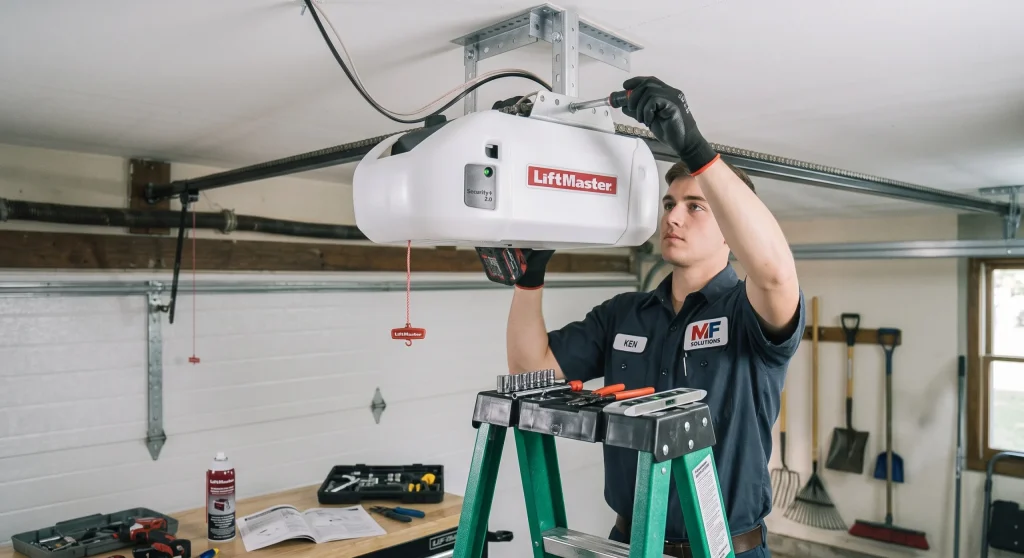
A modern garage door opener system includes a power head, drive mechanism, rail assembly, trolley or carriage, wall control, handheld remotes, and safety sensors mounted near the floor. Chain, belt, screw, and wall-mounted designs move the door differently, while limit settings control where the door stops in the open and closed positions. Safety sensors and reversal behavior are critical for homes with kids and pets, and reliable performance depends on proper setup and a door that travels evenly without binding. The sections below explain how opener components work together, which problems tend to develop over time, how failure patterns appear, and why opener behavior is directly connected to overall garage door safety.
How Garage Door Openers Move the Door and Control Travel
Garage door openers move the door by transferring motor power through a drive system that pulls or pushes a trolley along a rail. That trolley connects to the door via an arm, and the opener’s internal control board coordinates direction, speed, and stopping points. Travel limits define the door’s stop positions at fully open and fully closed, and force settings determine how the opener reacts when it encounters resistance. Safety sensors near the floor create an invisible beam across the opening and signal the opener to reverse if the beam is interrupted while closing.
Key parts that shape the opener’s operation include:
- Motor and control board that manage direction and timing
- The drive system that moves the trolley along the rail
- Travel limit controls that set open and closed stop points
- Force and sensitivity settings that influence reversal behavior
- Safety sensors that help prevent unsafe closing
- Wall control and remote system for daily operation
Opener performance is closely tied to door condition. If the door binds, sags, or becomes heavy, the opener may compensate by working harder, which can shorten component life. Professional evaluation helps confirm whether symptoms are caused by opener parts or by door resistance.
To learn more about common opener issues, visit our blog, “What Problems Commonly Occur With Garage Door Openers?”
Common Sources of Opener Strain That Homeowners Notice First
Many opener complaints start with sound and timing changes. A door that suddenly feels slower, reverses at the same spot, or stops short of the floor can indicate rising resistance, travel limit drift, or drive wear. In some cases, the opener is reacting to a door problem rather than an opener problem.
Early symptoms homeowners often report include:
- The opener runs, but the door does not move consistently
- The door stops or reverses during closing
- The door does not open fully or closes with a gap
- Clicking sounds or grinding develop during movement
- The opener light functions, but the door responds late
- Remotes work intermittently at normal distances
Door condition matters because opener strain can increase when lift support changes. For example, doors affected by broken garage door springs often feel heavier, and the opener may struggle or stop as resistance increases. A professional can first confirm whether the opener is failing or the door needs service.
For guidelines on opener failure, check our article, “How Do You Know When a Garage Door Opener Is Failing?”
How Opener Problems Can Escalate Into Access or Security Issues
Opener issues can become urgent when the door will not close, reopens unexpectedly, or stops mid-travel. In those moments, the opening may remain unsecured, or a vehicle may be trapped inside. Opener trouble can also change door behavior in ways that increase wear on rollers, hinges, and tracks.
Problems that commonly create urgent inconvenience include:
- The door refuses to close fully or reverses repeatedly
- Door stops mid-cycle and will not respond
- Manual release works, but the door feels too heavy
- Door shakes or binds during opener-driven travel
- The door closes off-square and leaves a gap
Homeowners often experience these situations as garage door emergencies because access and security are affected. Professional garage door repair helps confirm whether the issue is opener-related, door-related, or a combination of both.
For more info on how opener performance affects overall door safety, visit our blog, “Can Garage Door Openers Affect Overall Door Safety?”
What Pros Evaluate During an Opener Service Visit
A professional opener service visit treats the garage door and opener as a single integrated system rather than isolated components. The primary objective is to confirm controlled door travel, consistent stopping behavior, proper safety reversal, and secure closure under normal use. Evaluating how these elements interact helps determine whether performance issues stem from opener wear, door resistance, or both.
Door balance and travel resistance
Technicians begin by assessing how the door moves without the opener’s power. A door that feels heavy, binds along the track, or drifts out of position places added strain on the opener and can trigger false reversals or incomplete closure. Changes in balance or resistance often explain why an opener appears to be failing even when its internal components are still functional.
Drive components and rail system condition
The drive system is inspected for wear, alignment, and stability. Professionals inspect the chain, belt, screw, and wall-mounted drive, as well as the trolley, rail, and mounting points. Excessive noise, vibration, or uneven movement typically indicates wear or misalignment that can affect long-term reliability.
Limits, force behavior, and safety response
Accurate limit settings and force behavior are essential for safe operation. Technicians verify that the opener stops precisely at the fully open and fully closed positions and that safety sensors and reversal functions function correctly. Predictable door travel is critical for these safety features to work as intended.
Service direction and next-step planning
Based on the findings, recommendations may include garage door opener repair when components remain serviceable, or planning for replacement when safety performance and reliability are no longer dependable. A clear evaluation reduces guesswork, supports safer outcomes, and helps prevent repeat disruptions to daily access.
When Installation, Replacement, or Door Upgrades Become Practical
Some opener concerns are best addressed through a structured plan rather than repeated troubleshooting. A professional can clarify whether a service update, a new installation, or a broader door plan is the most practical long-term choice.
Installation planning for performance and fit
garage door opener installation decisions depend on door weight, door style, and household use patterns. A professional ensures the opener is matched to the door and set up for stable travel.
Replacement timing based on reliability
Replacement often makes sense when parts wear leads to repeated failures, inconsistent stopping, or unreliable sensor response. Service teams may also review whether door resistance is raising strain.
Considering the door condition at the same time
If the garage door shows significant wear, homeowners may consider replacing it to restore long-term reliability. Door condition can influence opener performance more than homeowners expect.
Make Opener Decisions With Clear, Safety-Focused Guidance
Garage door openers operate by coordinating drive power, travel limits, and safety response with the door, which must remain balanced and aligned. When performance changes show up as reversals, stops, loud operation, or incomplete closure, professional evaluation helps confirm whether the opener is worn or whether door resistance is driving the problem. Clear answers reduce guesswork and help homeowners plan service before access and security are disrupted.
MF Solutions Inc supports homeowners in Niles, IL, with professional diagnostics and service focused on safe travel, reliable closure, and preventive care. Our team evaluates opener performance alongside door condition to recommend a practical next step based on what the system needs.
Contact us today or call us to evaluate garage door opener concerns and guide service planning. A professional assessment identifies the safest and most practical next step based on coordinated door and opener performance.
Frequently Asked Questions
Do opener problems always mean the opener is failing?
Not always, door resistance caused by misalignment, component wear, or changes in lift support can create strain that appears to be an opener issue even when the motor is functioning properly.
Why does an opener reverse without an obvious obstruction?
Reversal can occur when resistance increases, travel limits drift, or safety sensors detect an unsafe closing condition. A professional evaluation helps determine whether the issue originates from the door system or the opener.
Can opener issues affect door safety?
Yes, inconsistent stopping, delayed reversal, or incomplete closure can create safety and security concerns. These behaviors indicate the system may not be responding correctly to resistance or load changes.
When should homeowners schedule service for opener problems?
Service is recommended when the door reverses repeatedly, stops mid-travel, closes unevenly, or becomes unreliable for daily access. These symptoms often worsen if the operation continues without inspection.
What should a homeowner mention when scheduling an opener evaluation?
Providing details about when the issue occurs, whether it repeats at the same point, and whether the door feels heavier than normal helps narrow the cause. Noting recent changes in noise or movement is also helpful.
Can a heavy door cause opener malfunction symptoms?
Yes, a door that feels heavier than normal can overload the opener. Reduced lift support forces the opener to compensate, increasing strain and triggering safety responses.
Do opener force settings change over time?
Yes, force settings can become inaccurate as door balance and friction change. Incorrect force adjustment may lead to premature reversals or incomplete travel.
Can worn rollers or tracks trigger opener problems?
Yes, increased friction from worn rollers or track misalignment raises resistance during movement. The opener may respond by stopping, reversing, or straining during operation.
Is inconsistent opener behavior an early warning sign?
Yes, inconsistent behavior often appears before complete failure. Changes in response time, noise, or stopping points usually indicate rising system resistance. Bob Vila summarizes troubleshooting checks to determine whether an issue is due to opener performance or door system resistance.
Why is door inspection important before adjusting the opener?
Adjusting the opener without confirming the door condition can mask underlying problems. Door balance and hardware condition must be evaluated first to ensure safe and reliable operation. DASMA’s garage door safety tips reinforce why hardware condition and safe operation checks should come before opener adjustments.