
Garage door opener problems often start with small changes that feel inconvenient at first, then become disruptive when daily access depends on reliable opening and closing. Homeowners commonly notice slower movement, unexpected reversals, louder operation, or inconsistent remote response, especially during busy routines.
Scheduling garage door repair after the opener’s behavior changes helps ensure safety and reduces the risk of a door that will not close securely. Opener performance also depends on door condition, since alignment, balance, and hardware wear influence how hard the opener must work. Knowing the most common opener problems helps homeowners describe symptoms clearly and plan professional service more effectively.
Power and Control Issues That Stop the Opener From Responding
Many opener calls begin with power or control problems rather than a failed motor. Wall controls, remotes, and receivers rely on stable wiring, consistent power, and predictable signal communication. When response becomes intermittent, homeowners may assume a complete opener failure, yet the root cause may involve a loose connection, an aging control component, or interference affecting the receiver.
Common power and control issues include:
- The wall button works, but the remote response is inconsistent
- Remote range drops noticeably at typical distances
- Opener lights turn on, but the motor will not run
- The opener starts, then stops without a clear pattern
- The door responds late after pressing the control
A professional diagnostic check verifies the power path, control circuit, and signal behavior before recommending a repair plan. A service visit also confirms whether door resistance is contributing to inconsistent movement.
To learn how opener components, drive systems, and safety features work together, visit our blog, “What Are Garage Door Openers and How Do They Work?”
Travel Limits and Reversal Behavior That Creates Gaps or Reopening
Travel limits define where the opener stops the door at fully open and fully closed positions. Force behavior determines how the system responds when resistance changes during motion. When limit settings drift, or resistance rises, homeowners may see the door stop short of the floor, reopen after touching down, or reverse mid-close.
Common limit and reversal patterns include:
- The door closes with a visible gap at the floor
- The door reverses during closing at the same spot
- The door opens partway, then stops and will not continue
- Door closes fully, then reopens immediately
- Door movement becomes slower and less predictable
Reversal behavior can also be triggered when lift support changes occur, such as when garage door springs break, because the opener senses increased resistance. A professional evaluation determines whether the issue is settings drift, rising friction, or a mechanical concern.
For deeper failure clues, check our article, “How Do You Know When a Garage Door Opener Is Failing?”
Drive System Wear That Causes Noise, Vibration, or Slipping
The garage door opener drive system converts motor power into controlled door movement, and wear in this system typically manifests as noise changes, vibration, or inconsistent travel. As components age or loosen, homeowners may hear grinding, rattling, or repeated clicking, or feel vibration along the rail as the door moves. In more advanced cases, the motor runs, but the door hesitates, slips, or moves unevenly, indicating loss of smooth power transfer between the opener and the door.
Signs that often point to drive system wear include:
- Grinding, rattling, or repeated clicking during travel
- Vibration along the rail while the door moves
- Jerky starts or rough stops at the ends of travel
- The motor runs, but the door moves inconsistently
- Delayed movement after pressing the control
Ignoring these signs allows wear to spread beyond the drive system. Continued operation under strain can loosen mounting points, damage rails, and place extra load on door hinges, rollers, and lift components. Over time, this increases the risk of misalignment, repeated reversals, and premature failure of connected hardware.
Prompt professional service helps restore proper drive alignment, secure mounting, and smooth power transfer. Early evaluation limits secondary damage, reduces vibration and noise, and supports safer, more predictable door operation during daily use.
When performance changes create safety concerns, visit our blog, “Can Garage Door Openers Affect Overall Door Safety?”
Door Conditions That Make the Opener Work Too Hard
Many opener complaints are driven by door resistance rather than an internal opener failure. A door that binds, travels off-square, or feels heavier increases the load the opener must pull. Over time, excess strain can shorten opener life and create repeated reversals or stops.
Door-related causes that commonly affect opener performance include:
- Worn rollers that bind at track turns
- Track alignment drift that increases friction
- Loose hinges and brackets that change section spacing
- Damage near hinge points on a garage door panel
- Uneven lift behavior tied to garage door cables seating
When door resistance is the primary issue, a technician first addresses alignment and balance, then verifies opener settings and safety response.
Service Paths Pros Recommend for Common Opener Problems
Professional recommendations depend on the root cause, overall reliability, and how the door behaves under load. Some situations are best handled with targeted component service, while others point toward replacement planning.
When repair tends to be the right direction
Garage door opener repair often works when controls, drive components, or settings are restored, allowing the system to maintain reliable stopping and reversing behavior.
When replacement planning becomes practical
Garage door opener replacement may be recommended when reliability declines, safety response cannot be maintained, or repeated disruptions keep returning.
When installation planning supports better performance
Garage door opener installation planning depends on door weight, ceiling clearance, and household usage patterns. Matching the opener to the door helps reduce strain and supports smoother operation.
Homeowners searching for garage door opener services near me often benefit from a diagnostic visit that clarifies the most practical service path.
Know When Opener Problems Need Professional Attention
Common opener problems include intermittent controls, reversal behavior, noisy drive wear, and travel limits that no longer match door movement. Many issues are directly related to door condition, as friction, imbalance, and hardware wear, which can cause an opener to appear to fail. Professional evaluation helps confirm the real cause, protect safety, and restore reliable daily access.
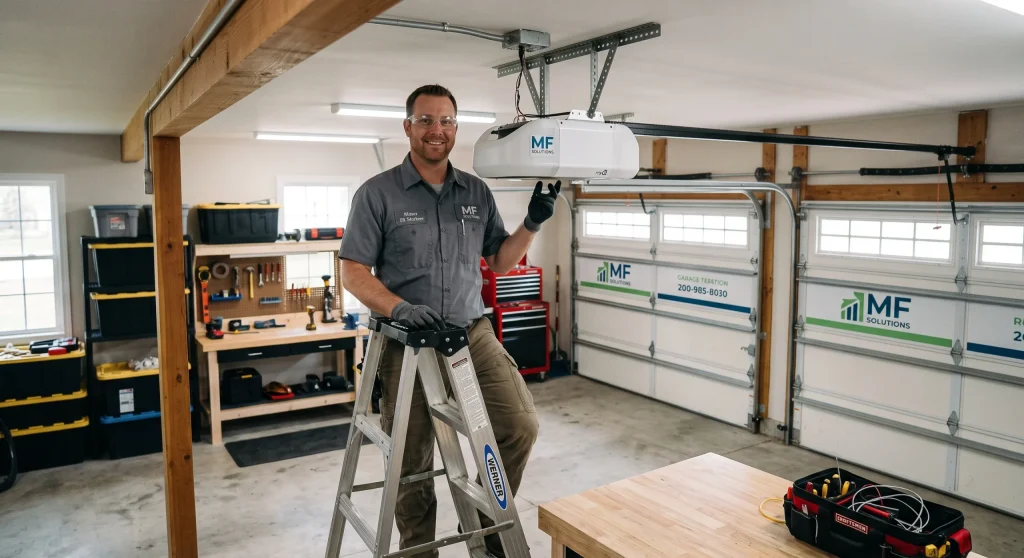
MF Solutions Inc helps homeowners in Niles, IL, identify the source of opener problems by evaluating control reliability, reversal behavior, drive wear, travel limit accuracy, and overall door condition. Our technicians check for friction, imbalance, and hardware wear that can strain the opener and create repeated performance issues. Contact us today or call now to schedule an evaluation to restore safe, dependable daily access.
Frequently Asked Questions
Why does the opener reverse without an obstruction?
Reversals often result from increased resistance, limit drift, or force settings that no longer match the door’s travel. A professional inspection can help determine whether the issue is related to the opener or the door.
Can door problems cause opener problems?
Yes, binding, misalignment, or imbalance increases resistance during movement. This added strain can trigger unexpected stops, reversals, and long-term opener wear.
When does an opener issue become urgent?
Urgency increases when the door will not close securely, stops mid-travel, or behaves unpredictably. These conditions can affect both safety and daily access.
What details help during scheduling?
Information such as whether the issue recurs at the same point, whether noise has increased, or whether the door feels heavier than normal helps narrow down the cause. Clear details improve diagnostic accuracy.
Can an opener be serviced without replacing the whole unit?
Sometimes, depending on the root cause and overall condition. Service options depend on whether reliable operation and safety response can be restored. This Old House reviews common non-replacement issues, such as sensor alignment and adjustment settings, that can be corrected when the motor and core components remain functional.
Can incorrect force settings cause repeated reversals?
Yes, force settings that no longer match door resistance can cause the opener to reverse prematurely. Changes in door balance often require force recalibration.
Does opener strain indicate a door balance issue?
Yes, an open strain is often a symptom of reduced lift support or increased friction. Addressing the door balance is essential before adjusting the opener. The Spruce notes that door hardware condition and movement resistance can drive abnormal opener behavior, making door condition checks important when strain is observed.
Can sensor alignment issues mimic opener failure?
Yes, misaligned or obstructed sensors can interrupt normal operation. Sensor-related issues may appear similar to motor or control problems.
Does continued use worsen opener-related problems?
Yes, continued operation under strain can accelerate wear on both the opener and door components. Early evaluation helps prevent larger system failures.
Why is professional inspection recommended for opener issues?
A professional inspection confirms whether the issue originates from the door, the opener, or both. Accurate diagnosis ensures safe operation and avoids unnecessary part replacement.