
Opener failure rarely happens without warning. Many homeowners notice gradual changes first, such as slower movement, louder operation, or repeated reversals at the same point. Those patterns often reflect rising resistance, worn drive components, or door conditions that force the opener to work harder.
When lift support is affected by broken garage door springs, the opener may appear to fail because the door becomes heavier and less predictable. A professional evaluation helps confirm whether the opener is worn, whether the door is adding resistance, or whether both issues are present. Clear symptom recognition helps homeowners schedule service before access or security is compromised.
Early Opener Failure Clues Homeowners Often Notice First
Early failure clues usually appear as changes in consistency. A reliable opener follows the same travel pattern each cycle, so new hesitation, uneven stopping, or increased noise indicates a change. Homeowners often notice these signs during busy routines when the door is used multiple times per day.
Common early clues include:
- The opener starts slower than normal or delays before movement
- The door reverses during closing without an obvious obstruction
- The door stops short of the floor and leaves a gap
- The door opens only partway, then stops
- The opener makes new clicking, grinding, or rattling sounds
- Remote response becomes inconsistent at normal distances
Professionals evaluate these patterns to determine whether the issue is limit drift, force behavior, drive wear, or rising resistance from the door system. Early evaluation supports safer scheduling and reduces the risk of sudden stops.
For a deeper overview of opener operation, visit our blog, “What Are Garage Door Openers and How Do They Work?”
Door-Related Conditions That Can Mimic Opener Failure
Many “opener failures” are driven by the door itself. When the door becomes harder to move, the opener senses rising resistance and may reverse, stall, or stop early. Door resistance can increase due to alignment drift, roller wear, or changes in lift support.
Door-related causes that often mimic opener failure include:
- Lift imbalance that forces uneven movement
- Cable seating issues along the garage door cables
- Track friction that increases binding risk
- Hardware looseness that changes section spacing
- A damaged garage door panel near the hinge points
When door resistance is the driver, professional service often focuses on correcting travel and balance first, then confirming safe opener interaction.
For common opener issues that often lead to these symptoms, check our article, “What Problems Commonly Occur With Garage Door Openers?”
Failure Patterns That Increase Risk of Sudden Disruption
As failure patterns develop, reliability drops. A door that reverses repeatedly, stops mid-travel, or refuses to close can quickly become a major disruption. When the opening cannot be secured, the situation becomes more urgent.
Higher-risk patterns include:
- The opener runs, but the door barely moves
- The door stops mid-cycle and will not respond
- The door closes, touches the floor, then reopens
- The door remains partially open and cannot be lowered
- Manual release works, but the door feels too heavy
Homeowners often experience these moments as garage door emergencies because daily access and security are affected. A professional evaluation helps determine whether the issue is opener failure, door resistance, or both.
For safety guidance tied to opener performance, visit our blog, “Can Garage Door Openers Affect Overall Door Safety?”
What Pros Check to Confirm Opener Failure Versus Door Resistance
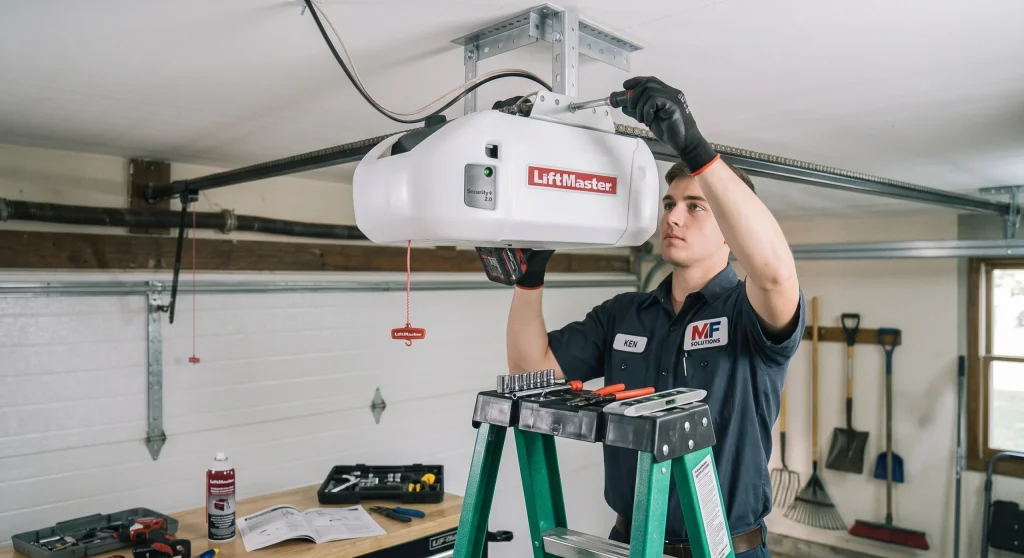
Professional diagnosis focuses on the opener and the door as a single system. The goal is to confirm controlled travel, reliable stopping behavior, and safe reversal response.
Balance and resistance evaluation
Technicians assess how the door moves without the opener’s power. A heavy or binding door often explains reversals and strain.
Drive system and mounting review
Rail alignment, trolley travel, and mounting stability are checked, since vibration and inconsistent movement often come from wear or looseness.
Limits, force behavior, and sensor response
Professionals confirm travel limits, force behavior, and sensor function. Reliable safety performance depends on predictable door travel.
Service direction planning
Findings may lead to garage door opener repair when components remain serviceable, or planning may include garage door opener replacement when reliability and safety response are compromised.
When Repairs, Replacement, or Installation Planning Makes More Sense
Service direction depends on performance, safety response, and the overall condition of the door. Professional guidance helps homeowners avoid repeat disruptions.
Repair planning for stable systems
When the opener is otherwise stable, targeted repair can restore predictable travel and safe response.
Replacement planning for declining reliability
Replacement planning often becomes practical when failure patterns repeat, stopping behavior becomes inconsistent, or the system can no longer maintain reliable operation.
Installation planning for a better fit
garage door opener installation planning depends on door weight, layout, ceiling clearance, and daily use patterns. Proper matching supports smoother long-term performance.
Homeowners searching for garage door opener services near me often benefit from a diagnostic visit to determine whether the door, the opener, or both is causing the issue.
Build a Safer Plan When Opener Performance Changes
Opener failure signs often include slower travel, repeated reversals, noisy operation, and inconsistent stopping behavior. Many symptoms are tied to door resistance, especially when the door becomes heavier or misaligned. Professional evaluation helps confirm whether the opener is failing, whether the door needs correction, or whether a combined approach is best. Clear diagnosis supports safer operation and reduces surprise disruptions.
MF Solutions Inc supports homeowners in Niles, IL, with diagnostics and service focused on reliable access and safe door operation. Our team evaluates opener performance and door condition together to recommend practical next steps.
Contact us today or call us to discuss failure signs and service planning. A professional evaluation can clarify the safest path for your home.
Frequently Asked Questions
Can a heavy door make an opener look like it is failing?
Yes, when the door balance changes or alignment drifts, resistance increases, placing additional strain on the opener. This can lead to slow movement, reversals, or stopping that appears to be an opener problem, even though the issue originates with the door.
Why does an opener reverse without an obstruction?
Reversals often occur when force settings or travel limits no longer align with the door's actual resistance. The opener detects an abnormal load during travel and triggers a safety response, even when no visible blockage is present. Wikipedia’s overview of garage door opener safety features summarizes why reversal and entrapment protection became standard expectations.
When does opener trouble become urgent?
Urgency increases when the door will not close fully, stops mid-cycle, or moves unpredictably. These conditions affect both access reliability and overall safety during daily use.
What should homeowners mention when scheduling service?
Homeowners should note whether the problem repeats at the same point, if operating noise has changed, and whether the door feels heavier or uneven. These details help professionals identify resistance patterns more accurately.
Can repair restore reliable operation?
Yes, reliable operation can often be restored once the underlying cause, such as wear, resistance, or misalignment, is corrected. Safety response is also verified to reduce repeated strain on the system.
Can door balance problems affect opener safety features?
Yes. Poor door balance can interfere with force sensing and reversal behavior, leading to inconsistent safety responses. This reduces predictable stopping and controlled movement.
Do noise or vibration changes matter if the door still works?
Yes, new or worsening noise often signals increased friction or developing component wear. These changes can progress into unstable operation if not evaluated.
Can repeated reversals damage the opener over time?
Yes, frequent reversals place ongoing stress on the drive system and internal controls. Over time, this accelerates wear and shortens overall service life. For added context on how repeated operational issues show up in real-world troubleshooting, see Forbes Home’s common garage door problems overview.
Is it an inconsistent closing of a door issue or an opener issue?
It can be either, but an inconsistent closing often begins with changes in door resistance. The opener usually reacts to load variation rather than causing it.
Can environmental changes affect opener performance?
Yes, temperature shifts, moisture, and seasonal expansion can change friction and alignment along the door’s travel path. These changes can influence how the opener senses load and responds during operation.