

Table of Contents
Garage door springs support controlled movement each time a door cycles, making them a central part of safe and reliable operation. Over time, spring tension declines due to regular use and material fatigue. Early performance changes, such as uneven travel or increased resistance, often indicate developing system strain that requires professional evaluation.
When spring condition deteriorates, added stress is placed on connected components, including the garage door opener and track system. Ignoring early warning signs can lead to sudden system failure, restricted access, and elevated safety exposure. Timely professional assessment supports stable operation, protects surrounding hardware, and helps maintain consistent garage door performance.
Understanding Garage Door Springs and Their Role
Garage door springs are essential components of the overall garage door system. Their primary function is to counterbalance the heavy weight of the door so it can open and close smoothly, either manually or with an automatic opener. Without properly working springs, a garage door becomes extremely heavy and unsafe to operate.
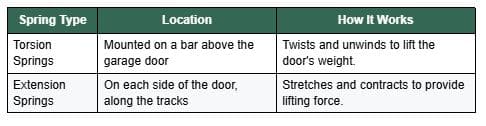
Two main spring systems are used in residential applications. Each type operates differently and is installed in a specific location. Knowing how these systems function helps identify early warning signs and supports safer long-term operation.
Types of Garage Door Springs Used in Niles, Illinois
Most residential garage doors in Niles rely on one of the following spring systems:
- Torsion Springs
- Mounted on a metal shaft above the garage door opening
- Operated by twisting and unwinding to generate a lifting force
- Provide controlled, balanced door movement
- Mounted on a metal shaft above the garage door opening
- Extension Springs
- Installed along each side of the door near the horizontal tracks
- Stretch and contract to assist with lifting the door
- Common on older or lighter door systems
- Installed along each side of the door near the horizontal tracks
Selecting the correct spring type and size depends on door weight, height, and track design. Improper spring selection can cause imbalance, inconsistent movement, and increased system strain. Professional evaluation ensures proper specification and safe operation.
How Garage Door Springs Support Safe Daily Operation
The primary role of garage door springs is to support the full weight of the door, which can reach several hundred pounds. By counterbalancing this load, springs allow the door to move with limited manual effort and reduce strain on connected components such as cables and openers.
When springs operate properly, they provide:
- Smooth and steady door travel
- Stable positioning when the door is partially open
- Reduced mechanical load on the opener
Garage door springs operate under constant high tension and have a limited service life based on operating cycles. When a spring weakens or breaks, the door can drop suddenly, creating serious safety risks and mechanical damage. A door with a failed spring should never be operated due to the danger created by unsupported weight and abrupt movement.
For additional safety guidance on this topic, review our blog “How Dangerous Is a Broken Garage Door Spring—and When Should You Replace It?” for a detailed explanation of spring failure risks and replacement timing.
Early Warning Signs Your Garage Door Spring Might Fail
Garage door springs often show signs of deterioration before a complete failure occurs. Changes in door movement, sound, or balance usually indicate that spring tension is no longer stable. Identifying these warning signs early helps reduce the risk of sudden door failure, unexpected system shutdown, and safety hazards.
A spring that fails without notice can cause the door to drop rapidly, leading to property damage and serious safety exposure. Recognizing the early indicators allows for a timely professional evaluation before a full system breakdown occurs.
Garage Door Feels Heavy or Difficult to Open
One of the earliest performance-related signs of spring failure is a noticeable increase in door weight during operation. When spring tension weakens, the springs can no longer counterbalance the door properly. This causes the full door weight to shift onto the lifting system.
Common performance symptoms include:
- The door feels extremely heavy when lifted manually
- The opener motor strains during operation
- The door opens only a few inches before stopping or reversing
- The door drops rapidly during closing
When these changes appear, the lifting system is under abnormal stress. Continued operation under this condition can damage other garage door components and increase safety risks.
Noisy or Unusual Sounds During Operation
A normally functioning garage door system produces only minimal sound. New or worsening noise often signals internal strain or structural breakdown within the spring system.
Critical sound indicators include:
- Loud popping or banging sounds, often signaling a snapped spring
- Grinding or scraping noises from overstressed coils
- Groaning sounds as metal components shift under load
- Repeated clanking from loose or stressed hardware
A single sharp bang is a strong indication that a spring has already broken under tension. When this occurs, the door should no longer be operated until it is professionally inspected.
For a detailed technical breakdown of how tension-related failures develop and why they create serious safety concerns, review our blog “What Really Happens When a Garage Door Spring Breaks Under Tension” for expanded insight.
Visual Clues of a Broken Garage Door Spring
A broken garage door spring often reveals clear visual warning signs before full system failure occurs. A routine visual check of the spring assembly can expose early indicators such as changes in shape, surface condition, or alignment. These visible changes signal that the metal is no longer functioning under proper tension and that door operation may soon become unreliable.
Common physical indicators include separation within the coils, surface corrosion, or visible distortion along the spring body. These conditions show that the component is under abnormal stress and nearing functional failure. Regular visual observation of the spring system supports earlier detection of developing issues and helps reduce the risk of sudden door malfunction that can disrupt access and compromise safety.
Gaps, Rust, or Physical Damage on the Springs
One of the clearest indicators of a broken torsion spring is a visible separation in the coil. When the steel breaks under tension, a distinct gap forms where the spring snapped. With extension springs, a failed unit may appear stretched, misshapen, or may hang lower than its paired spring.
Surface corrosion is another strong warning sign. Rust weakens the steel structure and accelerates metal fatigue. Springs affected by corrosion are far more likely to fail without warning since structural integrity is gradually reduced through chemical breakdown.
Key visual indicators include:
- A visible gap in a torsion spring coil
- An extension spring that appears stretched or uneven
- Surface corrosion along the spring length
- Bent, warped, or distorted spring segments
When any of these conditions appear, professional inspection is recommended to confirm whether spring integrity has been compromised.
Uneven Movement or Sagging of the Garage Door
A garage door that operates with uneven alignment often indicates that one spring has failed while the other remains under load. This imbalance causes one side of the door to carry more weight, leading to visible sagging or crooked movement during opening and closing.
Door imbalance places excessive strain on tracks, rollers, lift cables, and the opener system. Continued operation under these conditions increases the risk of hardware failure and can allow the door to derail from its tracks.
Common signs of spring-related door imbalance include:
- A noticeable tilt when the door is closed
- Jerky or unstable movement during operation
- Unequal cable tension from side to side
- Binding or resistance within the track system
If these conditions are present, the door should remain out of service until a qualified technician completes a full system evaluation.
For extended safety guidance and technical context on why professional service is required for spring failures, explore our blog “Why Professional Garage Door Spring Replacement Is Essential for Safety” for additional insight.
What to Do When You Notice Warning Signs
When warning signs appear, the safest action is to stop operating the garage door immediately and arrange professional service. Continued use can increase mechanical strain and lead to sudden system failure. A door that drops without control can cause severe property damage and create serious safety risks.
Operating the garage door manually or with the opener after spring damage is detected can intensify internal stress across the entire lifting system. Prompt professional inspection limits secondary mechanical damage and supports safer long-term operational performance. Ongoing technical education also enables garage door specialists to refine repair precision and uphold elevated safety standards. For additional guidance on industry safety practices, visit the International Door Association.
Why Professional Garage Door Spring Repair Is Recommended
Garage door spring systems operate under extreme mechanical tension and require specialized tools and technical training for safe handling. Certified technicians follow controlled procedures to manage tension safely and to restore proper system balance.
Professional service ensures the correct spring type and size are installed based on door weight, track configuration, and lift requirements. Improper spring selection often results in imbalance, accelerated wear across door hardware, and unstable operating performance. For additional guidance on proper system care and long-term upkeep, visit Doors Garage Door Care & Maintenance Guide.
Key benefits of professional spring service include:
- Controlled handling of high-tension components
- Accurate spring matching based on door specifications
- Efficient garage door repair that minimizes system downtime
- Verification of proper door balance and smooth travel after service
Placing spring service in the hands of qualified technicians reduces safety exposure and helps maintain stable garage door operation over time.
Awareness of the warning signs that signal potential garage door spring failure supports both safety and consistent operation. Unusual sounds, visible corrosion, or changes in door balance often indicate developing mechanical concerns that require prompt professional attention. Routine inspections and timely service help reduce the risk of sudden system breakdown and promote stable long-term performance. When any of these indicators appear, professional evaluation remains the safest path forward for protecting property and maintaining dependable access.
MF Solutions, Inc provides professional garage door spring service focused on safety, access stability, and reliable system performance. Service support includes detailed spring inspection and accurate system restoration for residential and commercial properties. Emergency assistance remains available for sudden spring-related failures. Contact us today or call now to schedule a professional garage door spring service appointment.
Frequently Asked Questions
How long should garage door springs last?
Garage door springs are rated by cycle life rather than time. Under normal residential use, most springs last several years. Frequent use, heavy doors, and environmental exposure can shorten their lifespan.
What happens when your garage door spring breaks?
When a spring breaks, the door may become extremely heavy and may not open at all or only lift partway. The opener may strain or fail to move the door. A broken spring also creates immediate safety and security risks.
Can a garage door spring break while the door is open or closed?
Yes. A garage door spring can break in either position. If it breaks while the door is closed, the door may not open at all. If it breaks while the door is open, the door may drop suddenly, creating a serious safety hazard.
Does the spring condition affect the performance of the garage door opener?
Yes. Weak or failing springs force the opener to work harder than designed. This increases wear on the motor and internal components and can shorten the overall lifespan of the opener system.
Is it dangerous to continue using a garage door with a failing spring?
Yes. A failing spring places excessive strain on the opener and hardware and can cause sudden system failure. Continued use increases the risk of injury and mechanical damage.
Can worn garage door springs affect door balance?
Yes. As springs weaken, they lose the ability to counterbalance the door’s weight. This causes the door to feel heavier, move unevenly, and place stress on other components.
Do garage door springs fail suddenly or gradually?
Most garage door springs weaken gradually due to metal fatigue, but the final break often occurs suddenly without warning. This is why early warning signs should never be ignored.
Can broken springs damage other garage door parts?
Yes. Broken or failing springs can damage cables, rollers, tracks, and the opener motor due to sudden weight transfer and mechanical strain.
Are both garage door springs likely to fail around the same time?
Yes. When one spring fails, the second spring usually has similar wear and is often near failure as well. This is why springs are typically replaced in matched pairs.