
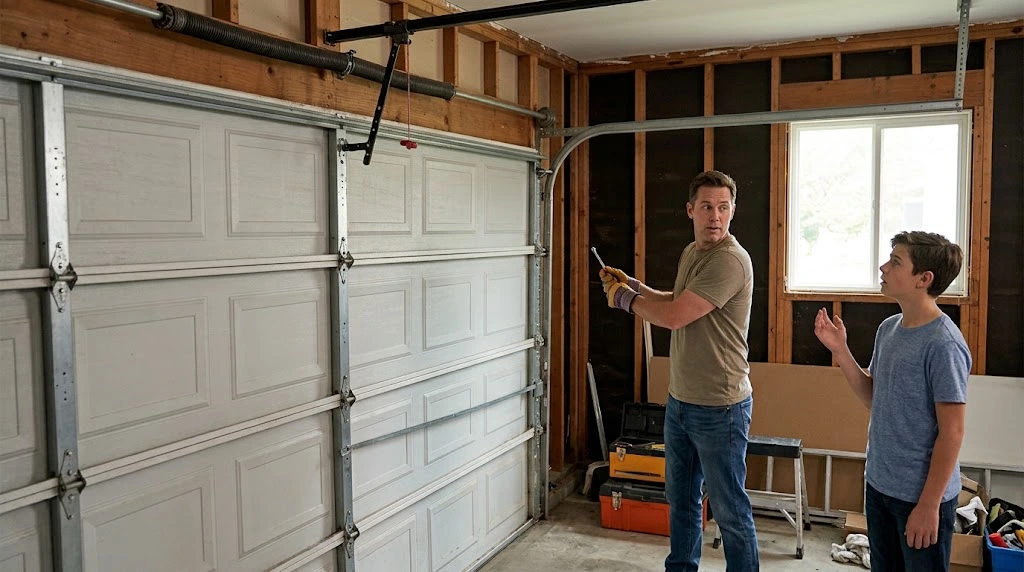
The sound a garage door makes almost always points to a specific part causing trouble somewhere in the system, from dry moving parts to a failing garage door spring. Identifying the sound correctly is the fastest way to know exactly what needs attention before a garage door emergency situation develops.
A lack of lubrication or regular maintenance builds most sounds gradually, while others show up suddenly and demand professional expertise instead of waiting for costly repairs. This guide breaks down six distinct sounds, what each one usually means, and how to tell them apart with confidence.
Key Takeaways
- Six distinct sounds account for most common causes of garage door noise
- A squeak or grind typically points to dry moving parts or metal rollers
- A sudden loud bang almost always means extreme tension has snapped a spring
- Humming or buzzing usually traces back to opener issues rather than the door itself
- Catching early warning signs with basic upkeep and a socket set check prevents minor issues from becoming bigger repairs
- A trained technician handles a few warning signs better than a wait-and-see approach at home
6 Types of Garage Door Noise
Learning to recognize these unusual sounds and common issues in the garage door system makes diagnosing noise far easier than guessing.
The table below breaks down where each sound tends to happen and how it behaves:
| Sound | When It Happens | How It Behaves |
| Squeaking or screeching | During every open or close cycle | Sharp and repetitive |
| Grinding | Throughout the door’s full movement | Deep and constant |
| Rattling | Continuously during the cycle | Sharp and scattered |
| Loud bang | Once, without warning | Sudden and one-time |
| Scraping | At a specific point in the cycle | Dragging and uneven |
| Humming or buzzing | While the opener is running | Low and steady |
Squeaking or Screeching
Squeaking is one of the most common noise problems from a lack of lubrication, and it repeats as a sharp, high-pitched sound with every open or close.
Squeaking traits worth recognizing include:
- The pitch stays consistent no matter how fast the door moves
- It gets louder in cold weather without regular lubrication
- The sound comes from hinges or rollers rather than the track itself
- It fades briefly right after lubrication, then slowly returns over time
- Multiple squeaks can overlap if several hinges are dry at once
A squeak that keeps returning despite regular lubrication is often the point where a professional garage door repair makes more sense than another coat of grease.
Grinding
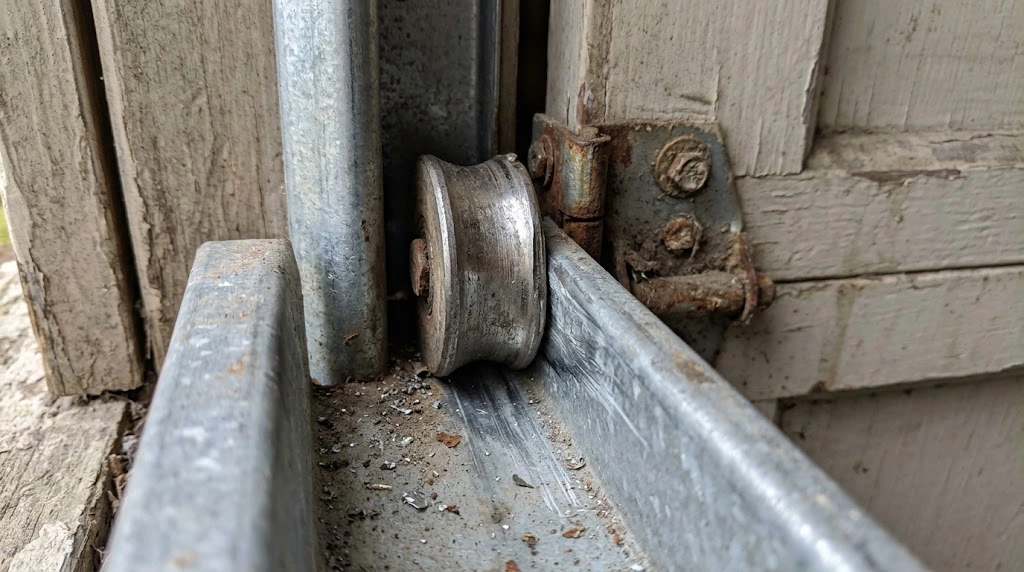
Grinding sounds deep and metallic, often signaling worn metal rollers or roller brackets, and it stays constant throughout the door’s movement.
Grinding sounds like this often come with:
- The noise sounds rougher than a squeak, almost like metal on metal
- It often gets louder as the roller moves further along the track
- The sound may pause briefly, then resume as the roller catches again
- It rarely improves with lubrication alone if the roller brackets are already worn
- Multiple points along the track can produce grinding at different times
Persistent grinding that lubrication cannot resolve often points toward a full garage door installation once the rollers have worn past saving.
Rattling
Rattling has a sharp, quick quality tied to loose hardware or mounting brackets, and it tends to happen throughout the entire cycle rather than at one specific point.
Rattling usually shows up alongside:
- Multiple small clanks happen close together rather than one clear sound
- The sound often comes from several locations along the track at once
- Vibration from the door shakes loose hardware over time
- It gets more noticeable the faster the opener moves the door
- Nearby items on shelves or walls may rattle along with the door
Rattling that continues after tightening every bolt sometimes traces back to a loose garage door panel that needs closer inspection.
Loud Bang
A sudden bang near the torsion coil is unmistakable, resembling a gunshot, and it carries a real serious injury risk to anyone standing nearby.
A loud bang tends to bring with it:
- It happens once, without warning, rather than repeating like other sounds
- The door often becomes noticeably harder to open immediately afterward
- One side of the door may hang lower right after the bang occurs
- The sound typically originates from the spring area near the top
- Visible cable slack often follows within the same day as the bang
To understand exactly what a sound like this means for the door’s safety, read our guide on Why Is My Garage Door So Loud? Common Causes Explained, which covers every major noise source in full detail.
Scraping
Scraping has a dragging, uneven quality tied to track alignment issues, and it tends to occur only at certain points during the door’s movement.
Scraping typically shows these details:
- The noise appears at the same spot in the cycle every single time
- It sounds rougher and more uneven than a smooth grinding sound
- The door may visibly hesitate or catch at the exact same point
- One side of the track often produces more scraping than the other
- The sound worsens gradually as the misalignment continues unaddressed
To learn how to correct scraping and other basic issues without calling for help right away, read our guide on Steps to Stop a Garage Door From Making Noise, which walks through each fix in order.
Humming or Buzzing
Humming or buzzing sounds low and mechanical, almost always from a garage door opener struggling with a dry chain drive or worn bearing plates.
Humming or buzzing often includes:
- The noise continues steadily rather than starting and stopping abruptly
- It often gets louder when the opener struggles to move the door
- The sound may accompany a door that moves more slowly than normal
- Dust buildup inside the housing without a damp cloth makes it worse
- The noise sometimes fades briefly after the opener cools down
To find out how proper lubrication habits can help quiet an opener like this over time, read our guide on How to Lubricate a Garage Door for Quieter Operation, which covers the full maintenance routine.
How to Identify Which Sound Is Happening
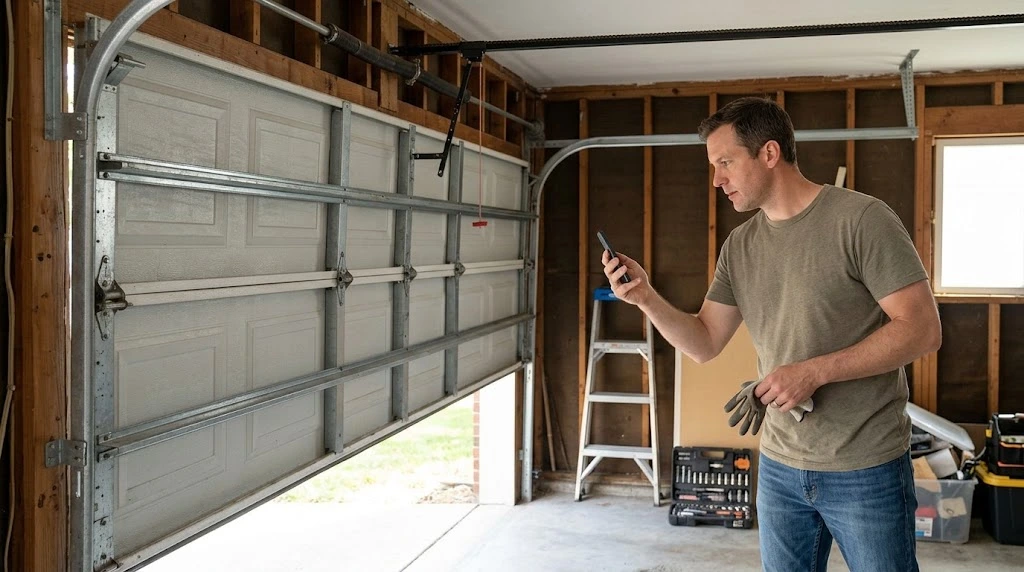
Confirming which sound a door is actually making takes only a few minutes and helps narrow down the most common causes before calling anyone.
These steps make identification easier:
- Run the door through a full cycle while listening closely from inside
- Note whether the sound happens once or repeats throughout the cycle
- Check if the sound changes with speed, temperature, or time of day
- Look for visible signs nearby, like water damage or rust
- Record the sound on a phone if it is hard to describe out loud
Taking a few minutes to isolate the exact sound saves time and expert advice once a repair or inspection actually begins.
Every Garage Door Sound Has a Specific Meaning
No two garage door sounds mean the exact same thing, and telling them apart is the fastest way to spot early warning signs before further damage sets in. A sound identified early almost always means a smaller repair than a problem left unchecked for weeks, whether it starts near track walls, spider webs, or other noise issues.
MF Solutions helps homeowners throughout Niles, IL restore quiet operation while small issues are still easy to manage, with thorough garage door service on every visit. Contact us or give us a call today, and let our team confirm exactly what a specific sound means for a garage door.
Frequently Asked Questions
Is a squeaking garage door always a sign of a bigger problem?
Squeaking on its own is usually a minor issue tied to a lack of lubrication rather than a serious mechanical problem needing special attention. It becomes more concerning only if it appears alongside grinding or a visible change in how the door moves.
Why does a garage door only make noise sometimes?
Intermittent noise often means a part is only dry, loose, or misaligned under certain conditions, like cold weather or a specific point in the cycle. Consistent noise, by contrast, usually points to a bigger problem that has progressed further without regular garage door maintenance.
Does a loud bang always mean the spring is broken?
A loud garage door bang almost always points to spring failure or extension springs releasing stored tension suddenly. Any other explanation for a bang this loud is extremely rare.
Can a rattling sound come from something other than the garage door itself?
Loose items stored near an unbalanced door or on nearby shelves can rattle in response to vibration without being the actual source. Checking the door's own hardware first usually clarifies whether the sound originates there.
Is grinding worse than squeaking?
Grinding usually signals more advanced wear than squeaking, since it often means a part has already progressed from dry to physically damaged. Squeaking alone tends to be easier and cheaper to resolve with basic upkeep like lithium grease alone.
How can someone tell scraping apart from grinding?
Scraping tends to happen at one specific point in the cycle, while grinding usually continues steadily throughout the door's entire movement. Paying attention to timing, especially near hinge bolts and metal parts, is the easiest way to tell the two apart.
Does the opener make different sounds than the door itself?
Yes, an opener typically produces a lower, more mechanical humming or buzzing sound, while the door and track produce sharper sounds like squeaking or rattling. Identifying the source location helps separate the two.
Should a specific sound get recorded before calling for repair?
Recording the sound on a phone helps a technician diagnose the issue faster, especially for intermittent noises that are hard to describe accurately. This small step often saves time, cost, and diy fixes during the actual inspection visit.
Can weather change how a garage door sounds?
Cold returns and summer heat both affect squeaking noticeably, since stiff, dry parts create more friction than they would in mild conditions. Sounds like grinding or rattling near the garage frame are less affected by temperature changes overall.