

Table of Contents
A garage door operates as one of the largest moving systems within a residence, relying on high-tension components to support smooth and controlled movement. When a broken garage door spring occurs, the entire system can lose stability, resulting in sudden inoperability and increased safety exposure. Spring failure places added strain on connected hardware and can interrupt secure access without warning.
Understanding the risks associated with spring damage helps property owners recognize the importance of timely professional service. A failed spring can lead to uneven movement, restricted access, and added mechanical stress across the door system. Prompt evaluation by a qualified garage door specialist supports safe operation, protects surrounding components, and restores reliable access while reducing the chance of secondary damage.
Garage Door Spring Systems: Understanding Torsion and Extension Performance
Garage door springs are essential components that counterbalance the weight of the door and support safe, controlled movement. Without properly functioning springs, even a standard residential garage door becomes extremely difficult to lift and places excessive strain on the opener system.
Two primary spring systems are used in residential applications: torsion and extension. Each type performs the same balancing function through a different mechanical method. Understanding how each system operates helps identify performance issues and clarifies why professional service is required when failure occurs.
Torsion vs. Extension Springs: How They Operate
Torsion springs are commonly installed on modern garage doors and are mounted on a steel shaft above the door opening. These springs store energy by twisting as the door closes. When the door opens, the spring unwinds and releases a controlled force to assist with lifting the door. This design supports smooth, even movement and reduces stress on other system components.
Extension springs are positioned along both sides of the door and extend parallel to the horizontal tracks. These springs stretch as the door closes and contract as it opens. Extension systems are more often found on older or lighter garage doors.
Using the correct replacement spring is essential for stable operation. Each spring must match the door’s exact weight and size. Improper spring selection can cause imbalance, premature wear, or additional mechanical damage. A professional evaluation ensures precise spring compatibility and safe performance.
Why Springs Are Essential for Safe Garage Door Operation
Garage door springs carry nearly the full weight of the door during operation. Residential garage doors often weigh well over one hundred pounds, and heavier steel doors may exceed four hundred pounds. Springs offset this load so the door can move with minimal resistance.
When the spring balance is lost due to failure, the door becomes extremely heavy and may descend rapidly. This creates a serious safety hazard for vehicles, property, and anyone positioned near the door opening. Spring failure also increases strain on lift cables, rollers, tracks, and the opener motor.
Springs operate under continuous mechanical stress from repeated opening and closing cycles. Over time, metal fatigue develops and eventually leads to failure. Professional inspection allows early detection of wear patterns, so corrective service can be scheduled before a sudden breakdown occurs.
For more information on early spring failure indicators, explore our blog “Warning Signs Your Garage Door Spring Is About to Fail” for additional guidance on recognizing developing risks.
Common Causes of Broken Garage Door Springs
Garage door spring failure rarely occurs without warning. In most cases, the break results from long-term mechanical stress combined with environmental exposure. Over time, repeated operation and external conditions weaken the metal until the spring can no longer support the door’s weight.
Understanding why garage door springs fail helps identify warning patterns and supports timely professional service. Below are the most frequent causes behind these critical component failures.
Wear and Tear From Repeated Door Cycles
The primary cause of garage door spring failure is natural wear from daily use. Springs are engineered for a limited number of operating cycles, with one cycle defined as a full opening and closing of the door. Once that cycle limit is reached, metal fatigue gradually develops.
Each time the door operates, the spring flexes under heavy load. After thousands of cycles, internal stress fractures form within the steel. Eventually, the spring can no longer maintain tension and breaks without further warning. This type of failure reflects normal mechanical aging rather than a sudden defect.
While this process cannot be avoided, professional technicians can often evaluate spring condition and determine when replacement is approaching before a full break occurs.
Environmental Factors in Niles, Illinois That Accelerate Spring Damage
Local climate conditions in Niles, Illinois, contribute to accelerated garage door spring deterioration. Seasonal humidity, rainfall, and winter road salt increase exposure to moisture. Prolonged moisture contact promotes corrosion on metal coils.
Corrosion weakens the steel structure and increases surface friction between spring coils. As friction rises, mechanical stress multiplies with every door cycle. Springs affected by corrosion are far more likely to fail earlier than those operating in dry environments.
Extension spring systems are especially vulnerable because these components are typically more exposed to surrounding air and temperature variation than torsion systems. Environmental stress combined with routine operation significantly shortens service life when corrosion is present.
For a closer breakdown of how tension-related failures develop and why they create serious safety risks, explore our blog “What Really Happens When a Garage Door Spring Breaks Under Tension” for a detailed technical explanation.
Warning Signs Your Garage Door Spring Needs Repair or Replacement
A garage door spring rarely fails without advanced warning. In many cases, visible and performance-related symptoms appear well before a complete break occurs. Recognizing these early indicators allows timely service before the door becomes inoperable or unsafe.
Changes in door movement, sound, or physical condition of the spring should never be ignored. The sections below outline the most common warning signs that signal a developing spring failure.
Physical Symptoms: Gaps, Rust, and Unusual Noises
A visual check of the spring system often reveals early signs of damage. Several physical conditions indicate a weakening or failing spring that requires professional evaluation.
Key physical warning signs include:
- Visible coil separation: A failed torsion spring often shows a clear gap in the center of the coil.
- Rust or surface corrosion: Corrosion weakens the steel and increases stress during operation.
- Abnormal operating sounds: Grinding, popping, or sharp snapping noises often indicate excessive tension or internal damage.
Any of these conditions increases the risk of sudden spring failure. Prompt inspection by a service professional reduces safety exposure and limits additional system strain.
Performance Changes: Door Movement Issues and Sudden Failures
Spring wear also becomes evident through changes in how the garage door operates. When counterbalance strength declines, the full weight of the door begins to affect overall movement.
Common performance-related warning signs include:
- The door feels excessively heavy during manual lifting.
- The automatic system strains when opening the door.
- The door closes too quickly or fails to remain in a partially open position.
- Uneven travel or visible tilting during operation.
Performance irregularities often indicate that spring tension is no longer properly supporting the door. Continued operation in this condition increases stress on cables, tracks, and the opener assembly.
For additional safety guidance on proper handling of spring replacement needs, view our blog “Why Professional Garage Door Spring Replacement Is Essential for Safety”, which explains why qualified service is required when spring failure is present.
Risks and Dangers of Trying to Fix Broken Springs Yourself
When a garage door spring fails, the situation may appear manageable at first. However, any attempt at self-repair on a broken spring exposes property owners to significant danger. Garage door springs operate under extreme tension, and improper handling can trigger sudden and forceful movement of metal components.
Spring repairs require specialized equipment, precise tension control, and formal technical training. Handling these repairs without proper qualifications places both personal safety and property at serious risk. The following sections outline the primary hazards involved.
Injury Hazards from High-Tension Components
Garage door springs store enough force to lift a door that can weigh several hundred pounds. When that stored energy is released unexpectedly, the results can be severe. Uncontrolled spring movement or tool slippage can cause life-altering injuries within seconds.
Key injury risks include:
- Violent release of spring tension leading to deep cuts or fractures
- Sudden movement of winding tools striking nearby surfaces
- Falling door sections caused by the loss of counterbalance support
Professional technicians use commercial-grade equipment designed specifically for controlled tension adjustment. Without that equipment and training, safe handling of spring systems is not possible.
Risks to Your Garage Door System and Personal Property
Improper spring handling also creates a high risk of mechanical damage throughout the garage door system. Installing an incorrect spring size or applying uneven tension can throw the entire door out of balance. Once balance is lost, strain transfers to other components.
Common system-related risks include:
- Track misalignment caused by uneven lifting force
- Cable failure due to shifted load distribution
- Opener motor overload from improper counterbalance
- Panel bending or structural distortion from uneven travel
In property damage scenarios, a falling door can strike vehicles, stored equipment, or structural framing. Professional repair ensures that the correct spring type is installed and that full system calibration is restored after service is completed.
Leaving spring work to trained technicians protects both personal safety and long-term system reliability.
The Right Time for Garage Door Spring Repair or Replacement
Knowing when to contact a professional for spring service is essential for maintaining safety and uninterrupted access. Warning signs such as visible gaps in the coil, uneven door movement, or resistance during opening indicate developing mechanical failure. Addressing these conditions early reduces the risk of a complete system shutdown.
In Niles, access to professional garage door repair services ensures a fast response for both routine spring concerns and urgent breakdowns. When door operation affects property access or security, immediate service becomes necessary.
Certain spring failures demand immediate professional attention due to significant safety and security risks. Emergency service is required when the door becomes unsafe to operate or blocks access.
Emergency conditions include:
- The door is stuck open or closed, affecting secure entry or exit
- The door is hanging at a severe angle after spring separation
- A loud snapping sound is followed by the opener running while the door remains immobile
In these situations, the overall door system is no longer stable. Continued operation can worsen structural damage and increase safety exposure. Emergency repair services are structured to restore secure and controlled operation without delay.
What to Expect During Professional Spring Repair
When a technician arrives, the service process begins with a detailed inspection to confirm spring failure and identify the correct spring specifications. The door is secured to prevent uncontrolled movement before any tension adjustments are made.
The standard service process includes:
- Securing the door and releasing the remaining spring tension
- Removing the damaged spring units
- Installing properly sized replacement springs
- Rebalancing the system for smooth door travel
- Full operational testing of manual and automatic movement
This structured repair sequence restores safe lifting force, reduces strain on the opener, and returns the door to stable operation with minimal disruption.
Choosing Garage Door Spring Repair Services in Niles, Illinois
Selecting a dependable local provider for garage door spring repair in Niles, Illinois, is essential for restoring safe and reliable operation. A qualified service team resolves the immediate failure while also supporting long-term system stability. The right company focuses on accuracy, safety standards, and consistent service quality.
Professional spring repair services in Niles offer prompt response, proper equipment, and verified technical expertise. Understanding what to evaluate before scheduling service helps ensure your door system receives the correct repair without risk.
Qualities to Evaluate in Local Technicians
When selecting a garage door spring repair provider in Niles, experience and technical credibility should guide your decision. Technicians with an extensive hands-on background in spring systems deliver precise diagnostics and dependable repairs.
Key qualities to evaluate include:
- Documented experience with torsion and extension spring systems
- Active licensing and full insurance protection
- Verified local reputation supported by consistent customer feedback
- Fast response capability for urgent spring failures
- Clear explanations of service steps and safety procedures
A provider that meets these standards delivers stable spring performance and restores full door balance with confidence.
Questions to Ask Before Scheduling Service
Before scheduling garage door spring service, asking targeted questions helps confirm that the provider follows best practices and quality standards. Transparent communication reflects professionalism and technical accuracy.
Important questions to ask include:
- Do you replace both springs during service for balanced operation?
- What type of spring system will be installed based on the door weight and size?
- Do you provide written service documentation for future reference?
- How is the door balance verified after spring installation?
- What post-service safety testing is performed before job completion?
These questions help confirm that your garage door system receives proper spring calibration, full balance testing, and dependable operational verification.
Garage Door Spring Replacement Options and Considerations
When a garage door spring fails, many homeowners want to understand the available replacement options and what influences the scope of service. Spring replacement requirements vary based on system design, door weight, and overall mechanical condition. Understanding these factors supports informed decisions and promotes long-term system reliability.
In Niles, Illinois, professional garage door services offer several spring replacement configurations depending on door structure and operational demands. Evaluating system needs helps determine the appropriate service path.
Factors That Influence Spring Replacement Requirements in Niles, Illinois
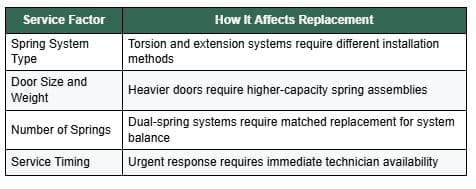
Several technical factors affect how garage door spring replacement is performed. The most significant factor is the spring system design. Torsion spring systems require different handling and calibration than extension spring systems. Door size and construction also influence spring requirements, since heavier doors require higher cycle-rated springs for correct balance.
Additional considerations include the total number of springs on the system and whether replacement is scheduled during standard service hours or requires urgent response. Each condition affects labor scope and service complexity.
Primary factors that influence spring replacement service include:
When Spring Replacement Is Sufficient Versus Full Door Replacement
In most cases, replacing worn or broken springs restores full system performance when the remaining components are in stable condition. Springs naturally reach the end of their service life after repeated cycles, and their failure does not automatically indicate a wider system fault.
In contrast, door replacement may be recommended when additional structural issues are present. Damaged panels, misaligned tracks, or persistent mechanical wear across multiple components can limit the effectiveness of spring-only service. Older door systems with recurring failures may also benefit from full replacement for improved operational stability.
Evaluating the total condition of the door assembly allows technicians to determine whether targeted spring replacement is appropriate or if a larger system upgrade will provide better long-term reliability and performance.
Preventive Maintenance for Garage Door Springs
The most effective way to reduce the risk of sudden spring failure is through consistent professional maintenance. Although all garage door springs have a limited service life, routine professional servicing can significantly extend operational longevity and support safe, reliable performance. Scheduled inspections allow developing issues to be identified early, reducing the likelihood of unexpected system disruption.
Consistent care also supports the overall performance of connected garage door components, including cables, rollers, and openers. A properly serviced system operates more smoothly, with fewer mechanical interruptions and improved long-term dependability.
How Professional Service Supports Spring Longevity
Routine professional inspections are essential for preserving garage door spring performance. During scheduled service visits, trained technicians assess spring condition, surface integrity, tension balance, and overall system alignment. These evaluations help detect early signs of metal fatigue, corrosion, and mechanical strain before complete failure occurs.
Professional maintenance programs typically include:
- Detailed inspection of spring condition and structural integrity
- Tension testing to verify proper counterbalance performance
- System alignment verification to reduce uneven stress on springs
- Full inspection of related components, such as cables and rollers
This structured approach reduces unnecessary strain on the spring system and promotes balanced door operation across its full range of motion.
System Care Practices That Reduce Future Breakdowns
In addition to scheduled professional servicing, overall system condition plays a major role in preventing premature spring failure. Springs that operate within properly aligned tracks and balanced hardware assemblies experience less mechanical stress during each operating cycle. Misaligned tracks, worn rollers, or imbalanced door panels can accelerate fatigue even in newly installed springs.
Maintaining proper spring performance also depends on using the correct spring type and cycle rating for each specific door. Doors that have been upgraded with heavier materials or insulation require recalculated spring capacity to maintain a safe operational balance. Professional evaluation ensures spring specifications remain properly matched to door weight and construction.
By prioritizing routine professional maintenance and comprehensive system evaluation, property owners can significantly reduce the risk of sudden spring breakdowns and maintain consistent garage door reliability over extended service life. For additional guidance on industry safety standards and best practices, visit the International Door Association.
Understanding the role of garage door springs supports safe and consistent door operation. Damaged springs increase the risk of system failure and property damage, which highlights the need for timely professional service. Recognizing early warning indicators helps reduce exposure to sudden breakdowns and unsafe operating conditions. Professional inspection also supports extended spring service life and stable system performance. For any indication of spring failure or reduced door balance, professional service remains the safest option.
MF Solutions Inc delivers professional garage door spring service focused on system stability, access safety, and long-term performance. Service operations include detailed system evaluation and precise restoration methods for residential and commercial properties. Emergency and scheduled support remains available for spring-related failures and performance concerns. Contact us today or call now to schedule a professional garage door spring inspection and restore dependable operation.
Frequently Asked Questions
Can I repair or replace a garage door spring myself?
No. Garage door spring repair and replacement require specialized tools, precise adjustments, and professional training. Springs operate under extreme tension and can cause severe injury if handled incorrectly. This work should always be completed by a qualified technician.
How do I choose the right replacement spring for my garage door?
The correct replacement spring is selected based on door weight, height, track setup, and whether the system uses torsion or extension springs. A professional technician measures and calculates the exact specifications required for safe and balanced operation.
What are the warning signs of a failing garage door spring?
Common warning signs include loud banging noises, slow or uneven door movement, visible gaps in torsion springs, difficulty opening the door, and the opener straining during operation.
What happens if a broken garage door spring is ignored?
Ignoring a broken spring can cause further damage to the opener, cables, tracks, and rollers. It also increases the risk of sudden door failure, which can result in property damage or serious personal injury.
Are torsion springs and extension springs replaced the same way?
No. Torsion and extension springs use different mounting systems and tension methods. Each type requires a specific replacement procedure and setup to ensure proper door balance and safe operation.
How long do garage door springs typically last?
Most garage door springs are designed to last for a specific number of operating cycles. Actual lifespan depends on door weight, usage frequency, and environmental conditions. Regular professional inspections help track spring wear.
Can a broken spring damage my garage door opener?
Yes. When a spring breaks, the opener must lift the full weight of the garage door without proper counterbalance, which can cause motor overheating, gear strain, and internal component damage. Continued operation under these conditions often results in complete opener failure. For additional guidance on related safety standards, visit the American Society of Home Inspectors.
Should both garage door springs be replaced at the same time?
Yes. When one spring fails, the second spring usually has similar wear. Replacing both at the same time helps maintain door balance and prevents a second breakdown shortly after repair.
Why is professional garage door spring replacement important for safety?
Professional spring replacement ensures proper tension settings, correct hardware installation, and full system balance. Trained technicians follow strict safety procedures to protect both property and occupants while restoring reliable door operation.
Can I repair or replace a garage door spring myself?
No. Garage door spring repair and replacement require specialized tools, precise adjustments, and professional training. Springs operate under extreme tension and can cause severe injury if handled incorrectly. This work should always be completed by a qualified technician.
How do I choose the right replacement spring for my garage door?
The correct replacement spring is selected based on door weight, height, track setup, and whether the system uses torsion or extension springs. A professional technician measures and calculates the exact specifications required for safe and balanced operation.
What are the warning signs of a failing garage door spring?
Common warning signs include loud banging noises, slow or uneven door movement, visible gaps in torsion springs, difficulty opening the door, and the opener straining during operation.
What happens if a broken garage door spring is ignored?
Ignoring a broken spring can cause further damage to the opener, cables, tracks, and rollers. It also increases the risk of sudden door failure, which can result in property damage or serious personal injury.
Are torsion springs and extension springs replaced the same way?
No. Torsion and extension springs use different mounting systems and tension methods. Each type requires a specific replacement procedure and setup to ensure proper door balance and safe operation.
How long do garage door springs typically last?
Most garage door springs are designed to last for a specific number of operating cycles. Actual lifespan depends on door weight, usage frequency, and environmental conditions. Regular professional inspections help track spring wear.
Can a broken spring damage my garage door opener?
Yes. When a spring breaks, the opener must lift the full weight of the garage door without proper counterbalance, which can cause motor overheating, gear strain, and internal component damage. Continued operation under these conditions often results in complete opener failure. For additional guidance on related safety standards, visit the American Society of Home Inspectors.
Should both garage door springs be replaced at the same time?
Yes. When one spring fails, the second spring usually has similar wear. Replacing both at the same time helps maintain door balance and prevents a second breakdown shortly after repair.
Why is professional garage door spring replacement important for safety?
Professional spring replacement ensures proper tension settings, correct hardware installation, and full system balance. Trained technicians follow strict safety procedures to protect both property and occupants while restoring reliable door operation.