

Table of Contents
Garage door springs manage counterbalance and controlled movement for residential door systems, supporting smooth opening and closing under heavy loads. As tension components age through repeated cycles, metal fatigue and alignment stress can develop, increasing the risk of sudden failure and unstable door operation.
When spring failure occurs, garage door emergencies may arise without warning, leading to restricted access, uncontrolled movement, and elevated safety exposure around the garage area. Professional service during such events supports controlled restoration of door function, limits mechanical strain on connected hardware, and helps maintain secure property access.
The Critical Role of Garage Door Springs in Home Safety
Garage door springs operate as a primary safety component within the entire door system. These high-tension components support the full weight of the door, which often exceeds several hundred pounds. When functioning properly, they allow controlled and stable door movement for both manual operation and automatic opener use.
As spring performance declines, the risk of sudden system failure increases. Loss of proper counterbalance places added stress on the opener, cables, and tracks while also creating a serious safety threat inside the garage and surrounding living areas.
How Garage Door Springs Function Within the Door System
Garage door springs store mechanical energy that offsets the downward force created by the door’s weight. This counterbalance allows a smooth lifting motion without requiring excessive force from the opener motor or during manual operation.
There are two primary spring configurations used in residential garage door systems:
- Torsion springs are mounted horizontally above the door opening on a metal shaft and generate a lifting force through controlled twisting.
- Extension springs are positioned along the upper side tracks and generate a lifting force through stretching and controlled recoil.
Both designs serve the same load-bearing purpose but operate through different mechanical methods. Correct spring sizing and system compatibility are essential for stable door performance and long-term system reliability.
Why Spring Failure Creates Immediate Safety Risk
Spring failure occurs under extreme stored tension and often happens without warning. When a spring breaks, the sudden release of force can cause a violent system imbalance. The most immediate danger is the unrestrained weight of the door. Without spring support, the door can drop abruptly, creating a severe crushing hazard.
Additional system risks linked to spring failure include:
- Uncontrolled door descent
- Opener motor overload
- Cable instability
- Track misalignment
Attempting to operate a door with a failed spring increases the likelihood of damage to secondary components and places household occupants and vehicles in danger. Professional garage door service is required immediately after any indication of spring failure.
For additional safety guidance related to spring failure and proper replacement timing, our blog “How Dangerous Is a Broken Garage Door Spring—and When Should You Replace It?” provides detailed insight into the risks associated with delayed service and system imbalance.
Common Signs You Need Garage Door Spring Repair
Garage door springs often show measurable warning signs before complete system failure occurs. Recognizing these indicators early helps prevent sudden breakdowns, system instability, and safety hazards. When spring performance declines, other garage door components also experience increased strain.
Monitoring visual and operational changes allows for timely professional service and reduces the risk of unexpected door failure. The following sections outline the most common indicators that spring repair may be required.
Visible Gaps, Rust, and Structural Irregularities
A basic visual review of the spring area can reveal early signs of failure. Torsion and extension springs display different physical indicators when wear advances. Any visible damage should prompt immediate professional evaluation.
Key visual indicators include:
- A clear gap in the center of a torsion spring
- Corrosion forming on the spring coils
- Distorted or elongated extension spring sections
- Uneven cable tension near the spring system
These conditions indicate metal fatigue and load imbalance within the spring system. Continued operation under these circumstances increases the risk of sudden failure.
Changes in Door Motion and Abnormal Operating Sounds
Shifts in how the door moves or sounds often accompany declining spring performance. When springs lose proper tension, the opener compensates, and mechanical stress increases throughout the system.
Common operational warning signs include:
- The opener motor is struggling to raise the door=
- The door rises only a short distance before stopping
- Uneven door travel that creates a tilted path
- Sharp popping, grinding, or strained mechanical sounds during movement
For additional detail on recognizing early failure patterns and understanding why timely service protects system safety, our article “Warning Signs Your Garage Door Spring Is About to Fail” explains spring behavior and failure indicators in greater depth.
Types of Garage Door Springs and Their Importance
Understanding the types of garage door springs used in your system supports proper diagnosis, safer operation, and accurate replacement when service is required. The two primary spring systems used today are torsion springs and extension springs. Each operates differently and carries distinct safety considerations.
Selecting the correct spring type is essential for balanced door movement, long-term system reliability, and reduced strain on connected components. The sections below explain how each spring type functions and why professional selection is required.
Torsion vs. Extension Springs: Key Differences
Identifying the spring type in your garage door system is straightforward based on location and movement. Torsion springs are mounted horizontally on a steel shaft above the garage door opening, while extension springs are installed along both sides of the door near the horizontal tracks.
Torsion springs generate a lifting force by twisting under tension. Extension springs generate force by stretching and contracting as the door moves. Differences in containment and durability also affect overall safety performance.
For a deeper breakdown of how spring failure develops under mechanical stress, our article “What Really Happens When a Garage Door Spring Breaks Under Tension” explains the internal forces and risks involved in greater detail.
Comparison of Garage Door Spring Types
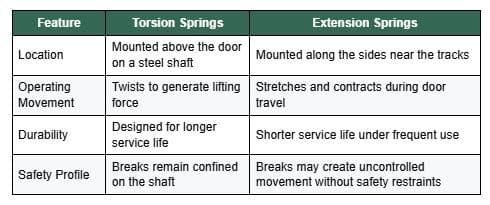
Understanding these distinctions improves communication with garage door service providers and supports accurate system evaluation.
Choosing the Correct Replacement for a Broken Garage Door Spring
Garage door spring replacement requires exact matching based on door weight, height, track configuration, and hardware setup. Using an incorrect spring disrupts door balance and increases mechanical strain across the entire system, including cables, rollers, and the opener assembly.
Professional technicians perform precise measurements to determine proper wire size, internal diameter, and spring length. These calculations ensure controlled movement and a stable lifting force. This level of precision is essential for large residential doors and custom installations.
Accurate spring selection supports long-term operational stability and reduces the likelihood of premature component failure across the lifting system. Professional assessment remains essential for maintaining proper mechanical balance and overall operational safety. Guidance published by The Spruce emphasizes that garage door spring replacement requires extreme tension and specialized handling, reinforcing the need for trained professional service when spring performance is compromised.
Risks of DIY vs. Professional Garage Door Spring Repair
When a broken garage door spring requires service, attempting repairs without proper training presents serious safety concerns. These components operate under extreme tension, and incorrect handling can result in severe accidents and long-term system damage. Professional repair services are equipped to manage these risks safely while restoring reliable door operation.
Handling spring-related repairs without certified training significantly increases the risk of physical injury and mechanical failure. Trained technicians follow strict safety standards and use specialized equipment to complete each repair with controlled precision and dependable results.
Safety Hazards When Attempting to Fix Broken Springs Without Professional Support
Garage door springs are designed to counterbalance the full weight of the door. Improper handling can cause the spring to suddenly release stored tension with significant force. That release creates an immediate risk of serious physical injury and structural damage to the garage door system.
Incorrect spring selection or poor installation also creates ongoing operating risks. A mismatched or unbalanced spring places excess strain on the opener and door tracks, increasing the chance of premature system failure.
Primary risks of non-professional spring repair include:
- Sudden release of spring tension causes physical injury=
- The door collapsed due to improper securing during servicing
- Damage to the opener, tracks, or panels from incorrect installation
- Premature spring failure caused by improper tension calibration
Tools, Skills, and Safety Methods Exclusive to Professional Spring Repair
Certified garage door technicians use specialized tools engineered for high-tension spring systems. These tools allow for precise control of torsion and extension spring adjustments under strict safety conditions. Standard household tools are not designed to handle the force stored in these components, which increases operational risk.
Professional expertise also ensures accurate system evaluation before installation begins. Technicians verify door weight, spring size, and balance requirements to restore proper lifting performance and long-term durability.
Professional garage door spring repair includes:
- Use of correct winding equipment and calibrated tension tools
- Secure door stabilization during servicing
- Accurate spring sizing based on door specifications
- Final balance testing to confirm safe and smooth operation
These safety procedures reduce operational risk and help maintain consistent door performance over time.
Finding Reliable Garage Door Spring Repair in Niles, Illinois
When a garage door spring fails, finding dependable garage door spring repair in Niles, Illinois, requires careful evaluation of service credentials, response reliability, and technical capability. A qualified local provider ensures safe system restoration and consistent long-term door performance. Local familiarity with residential door systems also supports faster diagnosis and accurate spring selection.
What to Look for in a Qualified Local Technician
Selecting a reliable garage door spring repair provider starts with verified credentials and documented regional service history. Established local companies with strong service records are more likely to maintain consistent quality standards and long-term accountability.
Experience remains a deciding factor when evaluating technical capability. Extensive hands-on experience with varying door weights, spring systems, and opener configurations enables accurate diagnostics and proper system calibration.
How Service Quality Affects Long-Term Safety and System Reliability
High-quality garage door spring repair plays a critical role in maintaining door stability, proper lifting balance, and long-term hardware longevity. Use of low-grade materials or incorrect installation methods often leads to repeated spring failure, increased system strain, and premature wear across connected components. Precision installation with correctly matched springs supports consistent daily operation and extends overall system service life. An expert garage door tune-up guide further confirms that even minor system adjustments involve spring tension management, cable alignment, and mandatory safety verification, all of which require specialized tools and professional expertise to be performed safely and correctly.
High service standards deliver the following operational benefits:
- Consistent door movement without strain on mechanical components
- Reduced risk of secondary damage to openers and track systems
- Extended spring lifespan through accurate tension calibration
- Safer daily operation for residential and commercial properties
Dependable garage door spring repair service supports long-term performance, equipment protection, and consistent system reliability without recurring disruption.
Professional garage door spring replacement ensures safe, consistent door operation throughout daily use. Springs manage the full lifting load of the door, and deferred service increases the risk of sudden failure and system imbalance. Recognizing early indicators of wear and seeking professional assistance at the right time reduces safety risks and limits the likelihood of extensive mechanical damage. Qualified technicians ensure accurate system balance and reliable long-term performance through proper service procedures.
MF Solutions Inc provides professional garage door spring replacement services focused on safety, access stability, and dependable system performance. Service support includes detailed system evaluation and precise restoration for residential and commercial doors. Contact us today or call now to schedule a professional garage door spring consultation and restore safe operation.
Frequently Asked Questions
What factors affect the scope of garage door spring repair in 2025?
Garage door spring repair depends on the type of spring system, the size and weight of the door, the overall condition of the system, and whether additional components, such as cables or rollers, are worn. Warranty coverage and long-term performance considerations also influence the repair process.
Should I replace just the spring or consider a complete door upgrade?
If the garage door is structurally sound and the issue is isolated to the spring, spring replacement is usually sufficient. If the system is older, has multiple worn components, or shows structural damage, a complete door upgrade may provide better safety and long-term reliability.
What are the most common signs that a garage door spring has failed?
Common signs include a loud bang from the garage, the door refusing to open, the door opening only a few inches, visible gaps in torsion springs, and the opener straining during operation.
Is a broken garage door spring considered an emergency?
Yes. A broken spring prevents the garage door from operating safely and can leave it stuck open or closed. This creates immediate safety and security risks that require urgent professional service.
Can a broken spring damage other garage door components?
Yes. A broken spring places extreme strain on the opener, cables, rollers, and tracks. Continued operation may result in additional mechanical damage and system misalignment.
How long do garage door springs typically last?
Garage door springs are rated by usage cycles rather than years. Actual lifespan depends on how frequently the door is used, door weight, and environmental conditions such as humidity and temperature changes.
Should both garage door springs be replaced at the same time?
Yes. Both springs wear at the same rate. When one spring fails, the second spring is usually near failure as well. Replacing both helps maintain proper door balance and prevents another sudden breakdown.
Can the garage door opener still work if the spring is broken?
The garage door opener may activate, but it is not designed to lift the full weight of the door without spring support. Continued use under these conditions can quickly damage the opener motor and its internal components.
Do temperature changes affect garage door spring performance?
Yes. Cold temperatures can make metal more brittle and increase the likelihood of sudden spring failure. Heat and humidity can accelerate metal fatigue and corrosion over time. Seasonal temperature shifts place added stress on garage door springs and can shorten their service life without regular professional inspection.