
When your garage door remote only works up close, works from one spot but not another, or suddenly has “short range,” the issue is usually signal-related. In Niles, IL, this often shows up after a lightning change, a new device gets plugged in near the opener, or cold weather exposes a weak remote battery, and in some cases, garage door repair is needed to restore consistent reception.
Range usually drops when the remote signal is weakened by battery decline, interference, antenna placement issues, or reduced receiver sensitivity. Common signs include needing to stand closer, pressing the button repeatedly, or seeing a performance change when the garage lights are on. Safe checks include replacing the remote battery, testing with the lights off, and confirming the antenna wire hangs freely. Anything involving opener electronics, internal wiring, or door hardware under high tension should be handled by a qualified professional.
Range Clues That Point To The Cause
Before you change anything, confirm you truly have a range problem and not a door or sensor problem.
Range clues include:
- The remote works reliably only when you are close to the garage door
- The remote works in the driveway, but not from inside the car
- The remote works in one direction of approach, but not the other
- The remote works better with the garage lights off
- The remote works after several presses, then stops again
If your remote works sometimes for reasons beyond range, or you want broader safe checks, read Garage Door Remote Works Sometimes? Common Causes and Quick Checks.
How Garage Door Remote Signal Works
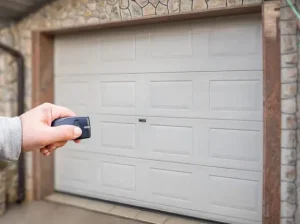
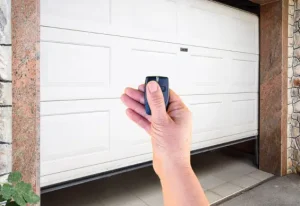
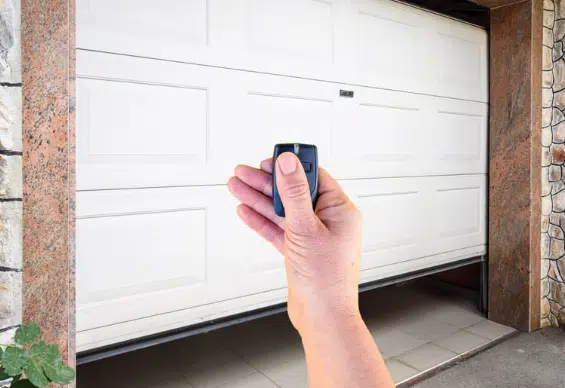
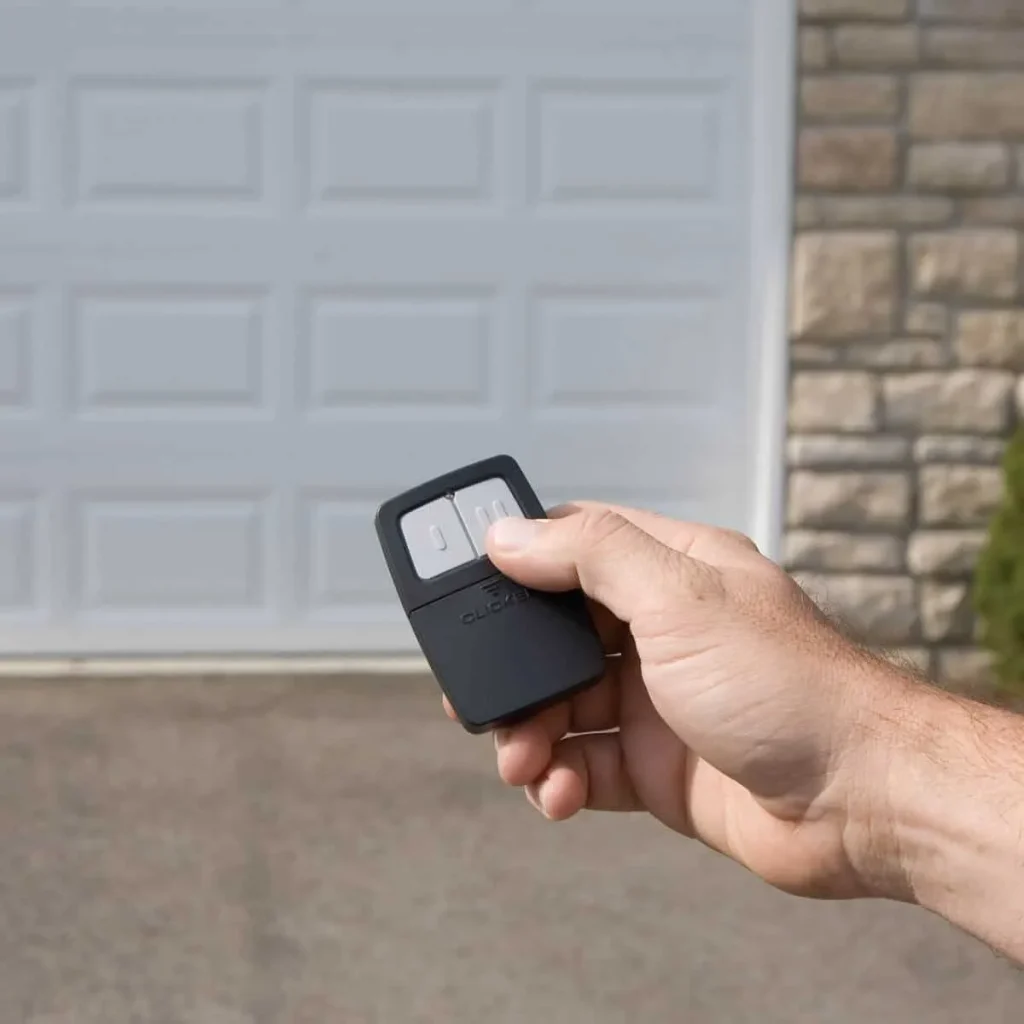
A handheld remote sends a short radio signal to the opener’s receiver. The receiver listens through a small antenna wire, usually hanging down from the opener motor unit. If the message is weak, blocked, or drowned out by electrical noise, the opener may not hear it every time.
Think of it like a conversation in a noisy room:
- A weak battery makes the “voice” quieter
- Interference adds noise
- A blocked antenna makes listening harder
- A weak receiver struggles even with a normal signal
That is why you may see a short-range, inconsistent response, or a remote that works only from certain angles.
Remote Battery Power Is The Most Common Range Killer
Battery Strength Drops Before It Dies
A battery can still light the remote’s indicator and still be too weak to push a strong signal across a driveway. Cold weather in Niles can make this show up faster because batteries produce less output in low temperatures.
What you may notice
- The range is shorter during cold mornings
- You need more than one press
- It works close up but fails farther away
Safe check
Replace the battery with the exact type your remote uses. Use a high-quality battery and make sure it is seated correctly. If the battery contacts look dirty or bent, stop and have a professional inspect the remote.
Prevention tip
Replace remote batteries on a simple schedule, especially before winter.
Button Wear Can Reduce Signal Consistency
If the button pad is worn, you may not get a solid “press” every time, which can look like a range issue.
What you may notice
- It works only when you press hard
- It works when you press a corner of the button
- It fails more often over time
Safe check
Test a second remote from the same spot. If one remote is reliable and the other is not, the unreliable remote is typically the cause.
LED Lighting Can Create Interference That Cuts Range
Why LEDs Cause Trouble
Some LED bulbs and LED fixtures create electrical noise that interferes with garage door remote signals. When a noisy bulb is installed in the opener housing, the interference is practically right next to the receiver.
What you may notice
- The range got worse right after a bulb change
- The remote works better when the garage light is off
- The range is worse when the garage door opener light is on
Safe check
Turn the garage lights off and test the remote from the same distance. If the range improves, suspect the bulb type or fixture.
Practical solution
Use bulbs rated for garage door opener use, and avoid low-quality bulbs that do not mention interference control.
Chargers, Power Supplies, And Smart Devices Can Add Signal Noise
Garages often turn into charging zones: tool batteries, scooters, cameras, Wi-Fi gear, and smart hubs. Some power supplies are electrically “noisy.” If a noisy device is close to the opener, it can reduce how well the receiver hears the remote.
What you may notice
- Range drops after adding a new device in the garage
- Range changes depending on what is plugged in
- It works sometimes, then gets worse again
Safe check
Temporarily unplug non-essential devices near the opener and test again from the same spot. If the range improves, plug devices back in one at a time to identify the source.
Antenna Position And Obstructions Can Reduce Range
The opener’s antenna is usually a thin wire that should hang down freely. If it is tucked up, wrapped around metal, or pressed against ductwork, the range can drop.
What you may notice
- The remote work is only from certain spots
- Range feels unpredictable, even with a fresh battery
- The range changed after storage was rearranged
Safe check
Look for the antenna wire and confirm it hangs straight down and is not trapped against metal. If the antenna looks cut or missing, stop there and schedule service.
Vehicle Factors Can Make Range Seem Worse
Sometimes the signal is fine, but the vehicle environment blocks or weakens it.
Common causes include:
- The remote is buried in a console
- The remote pressed against metal objects
- Certain window films reduce signal travel
- In-vehicle integrated controls need to be re-synced
Safe check
Step outside the vehicle and test from the same distance. If it works outside but fails inside, the vehicle environment is likely reducing the signal.
Neighborhood Interference Can Make the Range Inconsistent
Most modern openers use rolling codes, which help prevent accidental activation. Still, a busy signal environment can create interference, especially in neighborhoods with lots of electronics in close proximity.
What you may notice
- Range is worse at certain times of day
- The issue comes and goes without changes in your garage
Safe check
Test from the same spot at different times. If performance changes in a predictable way, interference is a strong suspect.
If you want help connecting behavior patterns to likely causes, read What Garage Door Remote Problems Can Reveal.
Receiver Sensitivity Can Fade Over Time
If you have tried a fresh battery, ruled out lighting interference, confirmed antenna position, and reduced nearby electrical noise, range loss can point to a receiver that is no longer hearing signals well.
On many openers, the receiver is part of the control board. Over time, especially after repeated power events, sensitivity can degrade. Chamberlain also confirms that proper remote pairing and signal communication depend on a correctly functioning receiver system.
What you may notice
- Multiple remotes show the same short range
- Re-sync works briefly, then the issue returns
- Range stays extremely short even after the easy checks
If you are deciding whether to stop checking and schedule service, read When to Call a Garage Door Professional for Remote Issues.
Safe Range Checks You Can Do Without Getting Into Repairs
These checks help you confirm the cause without getting into unsafe work.
Start With Power And Distance
- Install a fresh battery
- Test close to the garage, then farther back in the driveway
- Test inside the car versus outside the car
Isolate Lighting And Electronics
- Test with garage lights off
- Temporarily unplug nearby electronics and re-test
Confirm Antenna Basics
- Confirm the antenna wire hangs down freely
- Confirm nothing is pressing the antenna against metal
Write Down Your Results
Record:
- Whether the range improves with the lights off
- Whether the range improves outside the car
- Whether the issue started after a bulb or device change
Those notes help a technician confirm the cause faster.
NAHB’s routine home maintenance guidance supports the habit of simple, repeatable checklists, which is exactly why documenting range test results helps shorten the diagnostic process.
Keep Your Remote Range Strong In Every Season
A few habits prevent most range complaints:
- Use garage-door-compatible bulbs
- Replace batteries before winter
- Keep noisy chargers and hubs away from the opener area
- Avoid storing remotes pressed against metal objects
- After storms, note any sudden changes so they can be traced to a power event
Stop The Close-Range Clicking And Restore Full Remote Range
If you have gone through the safe checks and the range is still short or inconsistent, the next step is testing the receiver and signal environment with the right tools. A technician can confirm whether the cause is interference, an antenna issue, or a receiver that is no longer hearing signals clearly.
MF Solutions provides reliable service in Niles, IL, including remote and opener signal evaluations designed to pinpoint the cause and restore dependable range. If you want the issue diagnosed in one visit, share what you observed during the range checks so the technician can focus on the most likely cause right away. Contact us today or give us a call to schedule a visit and get your garage access working reliably again.
Frequently Asked Questions
Do garage door remotes use the same frequency?
Not always, since brands and model generations can use different frequencies. Your remote must match the opener’s system and be programmed correctly.
Can a metal garage door reduce the remote range?
Yes, metal surfaces can reflect or weaken radio signals in some setups. This is more noticeable when using the remote from inside a vehicle.
Why does the remote work better from one side of the driveway?
It often points to signal reflection, blockage, or interference from a specific direction. Antenna position and nearby electronics can also influence this.
Can fluorescent lights affect the garage door remote range?
Yes, some fluorescent fixtures and older ballasts can create electrical noise. If the range changes when a fixture turns on, interference is likely.
Does a universal remote have a shorter range than the original?
Sometimes, depending on the remote design, battery strength, and programming match. If only the universal remote struggles, the remote is a strong suspect.
Why does the range get worse when the opener light turns on?
This commonly happens when a bulb or light circuit creates interference. Testing with the lights off is a quick way to confirm it.
Can remote work be fine outside the car but not inside?
Yes, the vehicle environment can block or weaken the signal. Console placement and certain window films can make this more noticeable.
Should I replace the remote before suspecting the opener?
If one remote struggles and another works fine, start with the remote and its battery. If all remotes struggle, the opener receiver or interference is more likely.
Is there a fast way to tell if interference is the problem?
Yes, test with garage lights off and temporarily unplug nearby electronics, then re-test from the same spot. If range improves, interference is a likely cause.