
Garage doors get louder when hinges dry out, fasteners loosen, or a part simply wears past its usable life, and the sound itself is usually the clearest clue to which one is at fault. That sound rarely disappears on its own, and a minor issue like this typically grows into bigger repairs the longer the underlying part goes unchecked.
Noise like this rarely stays the same for long, and what starts as a faint squeak or rattle can escalate quickly into something that needs a full garage door repair before it gets worse. This guide breaks down what each sound usually means, why it happens, and what keeps a garage door quiet for the long haul.
Key Takeaways
- A garage door can make six distinct sounds, each pointing to a different cause
- Lack of lubrication is behind most squeaking and grinding heard during daily use
- Worn rollers and loose hardware together account for the bulk of noise complaints
- A loud bang near the spring means immediate professional attention, never a homeowner fix
- An opener that hums or buzzes often signals worn gears inside the motor housing
- Consistent lubrication and hardware checks keep most noise problems from coming back
Types of Garage Door Noise
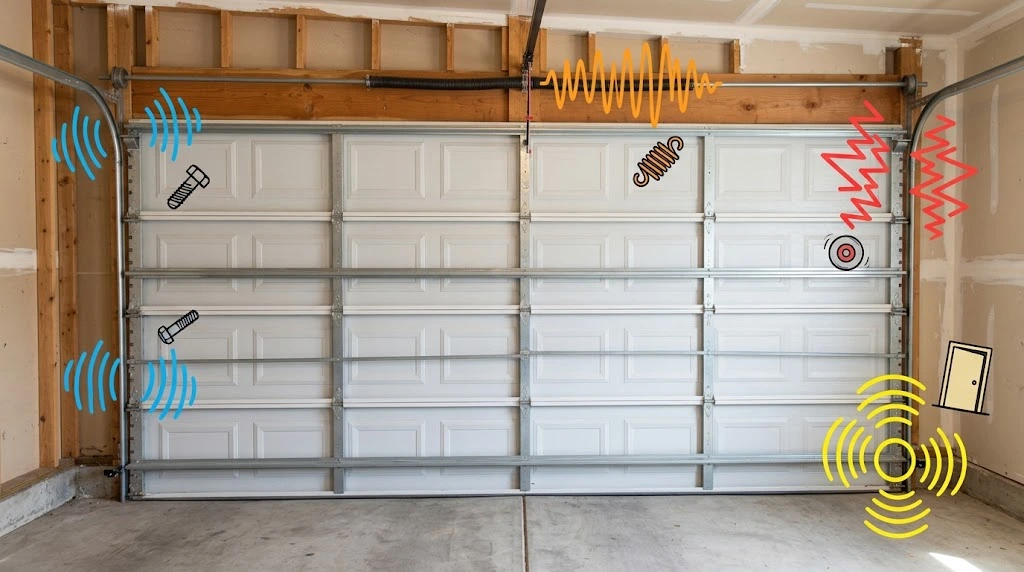
Garage doors tend to make a distinct sound for nearly every underlying cause, and matching the sound to its source makes diagnosing the noise far easier.
The table below covers six common sounds and their usual causes:
| Sound | What Causes It | What It Suggests |
| Squeaking or screeching | Dry metal hinges, unlubricated rollers, or friction from cold weather | Lack of lubrication |
| Grinding | Worn-out roller bearings, metal rubbing on tracks, or lack of grease | Worn garage door rollers |
| Rattling | Loose nuts, bolts, or vibrating support brackets shaken by daily movement | Loose hardware |
| Loud bang | A snapping or broken torsion spring, which requires an immediate professional fix | Sudden spring failure |
| Scraping | A misaligned or bent track forcing the door out of square | Track alignment issues |
| Humming or buzzing | An overworked opener motor or obstructed drive mechanism | Opener issues |
To break down exactly what separates one of these noise problems from another, read our guide on What Kind of Noise Is a Garage Door Making?, which walks through each sound and its likely cause in detail.
Common Causes of a Noisy Garage Door
Lack of Lubrication
Metal hinges, springs, and rollers rub together without grease, causing most of the squeaking and grinding a garage door makes.
This kind of dryness usually builds up from:
- Months passing without any lithium grease applied to moving parts
- Dust and grit collecting on hinges and mixing with old, dried grease
- Nylon rollers hardening over time from age and repeated sun exposure
- Cold returns during winter, thickening old lubricant until it stops working
- Skipping seasonal maintenance checks that would normally catch dryness early
A fresh application of garage door lubricant on every hinge and roller typically quiets this noise within a single cycle.
Worn or Damaged Rollers
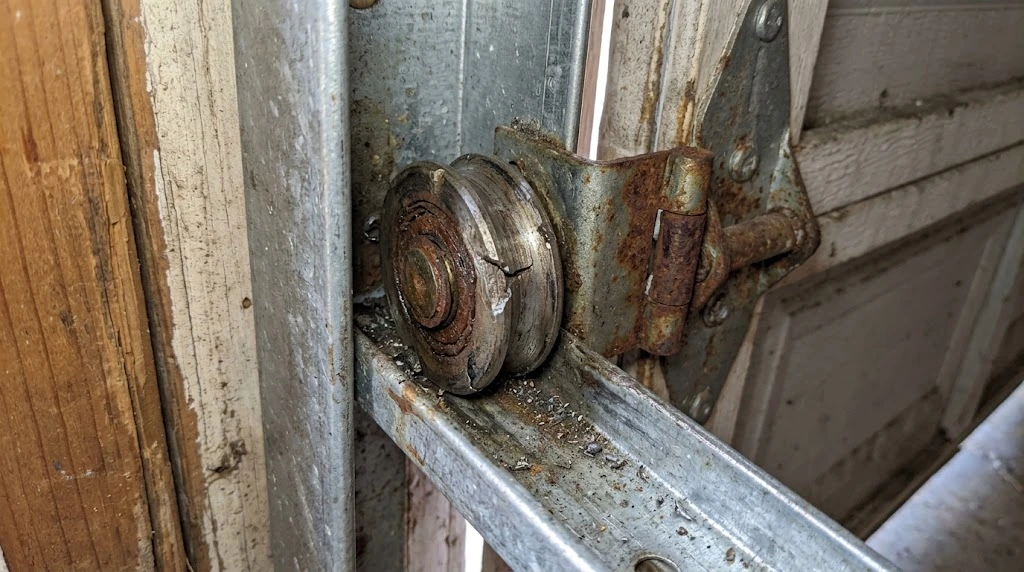
Old steel rollers lose bearing plates or crack over time, making a loud rattling or grinding noise as they move through the track.
Worn garage door rollers tend to develop from these contributing factors:
- Years of daily cycles gradually breaking down the roller surface
- A lack of lubrication accelerating friction between the roller and track
- Track alignment issues forcing rollers to grind unevenly against metal
- Cheaper roller brackets failing faster than higher-quality alternatives
- Water damage from moisture speeding up rust and corrosion
Nylon rollers tend to run quieter than metal rollers and often solve this specific noise problem once installed.
Loose Hardware
Daily vibrations shake nuts, bolts, and track brackets loose, leading to sharp banging and rattling sounds throughout the door’s full cycle.
Loose hardware tends to develop from these contributing factors:
- Repeated vibration from daily use working screws out of their threads
- Mounting brackets shifting slightly after years of consistent use
- Extreme tension from an unbalanced door adding uneven strain to fasteners
- Summer heat and cold both expanding and contracting metal brackets
- Hinge bolts backing out gradually without anyone noticing right away
Running a socket set over every bolt and bracket on the door usually resolves rattling noise problems and prevents a bigger garage door repair down the line.
Misaligned or Bent Tracks
If tracks warp or shift, the door scrapes or binds against the metal frame, creating one of the more noticeable unusual sounds a garage door makes.
Misaligned tracks tend to develop from these contributing factors:
- A minor bump from a vehicle or stored item nudging the track
- The garage frame settling gradually as the structure ages
- An unbalanced door pulling unevenly against the track with every cycle
- Loose mounting brackets allowing the track to drift slowly
- Years of repeated use loosening the track’s original installation points
Left alone too long, a misaligned track often turns into one of the bigger problems a homeowner has to deal with, sometimes causing further damage.
Unbalanced Door and Spring Wear
Aging springs or uneven cables force the whole system to strain, creating the popping, groaning, or loud warning sounds that signal spring trouble.
Spring issues tend to develop from these contributing factors:
- Ordinary metal fatigue after years of repeated daily cycles
- Rust or corrosion weakening the coil from the inside out deserves special attention
- Extension springs stretching past their original tension over time
- The wrong garage door spring size creating uneven, accelerated wear
- Extreme tension from sudden temperature changes affecting the metal’s expansion
Any loud bang near the torsion springs area calls for spring replacement handled by a trained technician, never a homeowner attempt.
Worn Opener Motor or Gears
Internal plastic gears or mechanical drives inside the garage door opener wear down over time, adding a humming or buzzing sound.
Opener wear tends to develop from these contributing factors:
- Years of daily cycles gradually wearing down internal plastic gears
- A dry or worn chain drive forcing the motor to work harder
- Extreme tension on the drive mechanism from an unbalanced door
- Dust and debris accumulating inside the opener housing over time
- Age causing bearing plates inside the motor assembly to wear unevenly
An opener straining audibly on most cycles usually needs professional expertise before the motor fails completely.
Basic Repairs to Try Before Calling a Professional
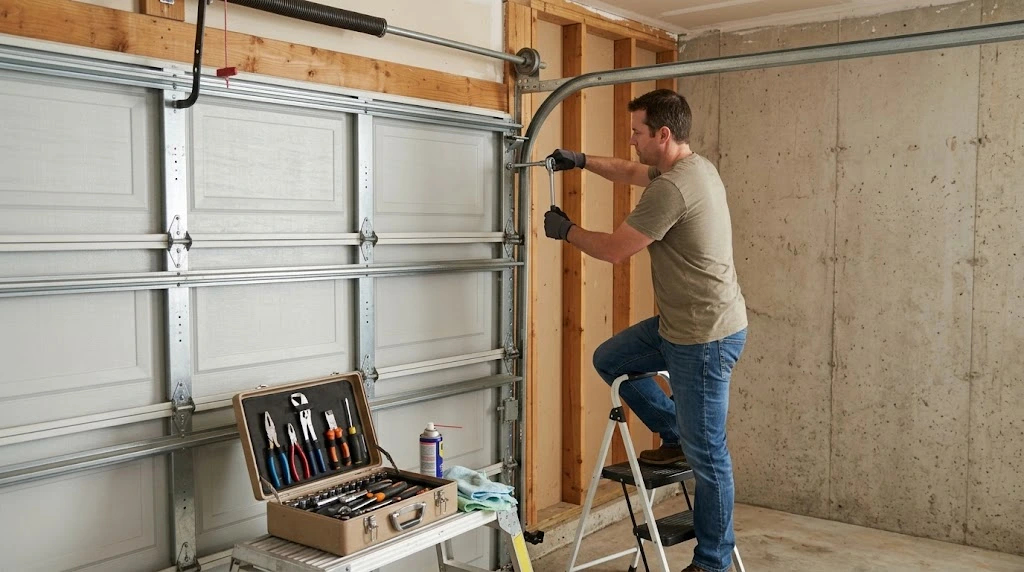
A handful of basic repairs can resolve most common noise problems, provided the source of the sound has already been identified.
These are the most effective fixes for garage door noise:
- Properly lubricating every hinge, roller, and spring with a fresh coat of grease
- Tightening every visible bolt and bracket with a properly sized socket set
- Swapping out cracked or worn nylon rollers for new replacements
- Realigning a shifted track section back into its original position
- Adjusting a loose chain drive back to the manufacturer’s tension specs
To try each of these repairs step by step, and stop the noise for good instead of guessing at the cause, read our guide on Steps to Stop a Garage Door From Making Noise, which covers each fix in full detail.
When to Call a Professional for Garage Door Noise
A few warning signs mean it is time to stop troubleshooting personally and call someone with real safety features expertise instead.
These situations call for garage door sensor repair or a full professional inspection:
- A loud bang originates from anywhere near the spring assembly
- Grinding continues even after the rollers have already been replaced
- The opener issues persist despite basic troubleshooting attempts
- The same noise problem keeps returning after a homeowner repair
- Multiple unusual sounds occur together during a single open-close cycle
Waiting through one of these warning signs usually turns a manageable repair into a far more expensive service call.
How Professionals Diagnose and Fix Garage Door Noise
A trained technician approaches noise diagnosis methodically, running the door through repeated cycles to isolate exactly where the sound originates.
Each visit for a noise complaint typically includes:
- Multiple test cycles to pinpoint the exact source of the sound
- A close inspection of every roller, hinge, and bearing plate
- Replacement of any part showing visible wear, cracking, or damage
- Precise track realignment using tools designed for that exact purpose
- A final test run to confirm the garage door system operates quietly
Getting the diagnosis right matters most for a full garage door installation or repair, since the wrong fix can create a new noise entirely.
Maintenance Steps That Keep a Garage Door Quiet
A consistent maintenance routine, including regular lubrication, keeps a garage door quiet and needing less attention between seasonal checks.
These habits help a garage door stay quiet over the long term:
- Applying garage door lubricant to every moving part every few months
- Wiping down tracks with a damp cloth to clear dust and spider webs
- Testing every bolt and bracket for looseness during seasonal checks
- Watching for early warning signs like visible spring wear or rust
- Clearing debris out of track walls before it hardens into buildup
To follow the exact maintenance steps that lead to quieter operation over time, read our guide on How to Lubricate a Garage Door for Quieter Operation, which covers the full routine in complete detail.
A Quiet Garage Door Comes Down to Consistent Upkeep
This kind of noise problem almost always has a traceable cause, and identifying it early usually costs far less money and time than waiting for a full breakdown. A door that runs quietly today can start rattling again within a single season if regular upkeep gets skipped along the way.
MF Solutions works with homeowners throughout Niles, IL to track down the exact source of a noise complaint and resolve it correctly the first time. Contact us or give us a call today, and let our team handle the diagnosis, the repair, and the maintenance that keeps things quiet going forward.
Frequently Asked Questions
Is it normal for an older garage door to make more noise?
Added noise is common as a door ages, but a healthy garage door service schedule should still keep the system reasonably quiet. A noticeable jump in volume usually means something specific has worn out rather than simple aging alone.
Can a homeowner fix a squeaky garage door without help?
Squeaking responds well to a straightforward lubrication pass across hinges and rollers, one of the more common issues a homeowner can resolve alone. This fix rarely requires bringing in outside help.
Does a noisy garage door opener mean something is broken?
A grinding or slapping sound from the opener often points to chain drive tension that needs adjusting soon rather than a sign of a broken motor. A skipped chain or a jump off the rail becomes far more likely the longer that noise goes unaddressed.
What does a grinding sound usually mean?
Grinding almost always points to a worn roller or a track that has shifted out of alignment. Either cause tends to worsen quickly without prompt attention from a technician.
How urgent is a loud bang near the garage door spring?
A loud bang near the spring should be treated as urgent, since it often signals a sudden spring failure under extreme tension. This area carries a genuine serious injury risk and should be left to a trained technician.
Can loose hardware really be the cause of a rattling garage door?
Loose hardware is one of the most common causes of rattling on doors with daily use, and tightening it counts among the easiest diy fixes. A quick pass with a socket set across the brackets often solves the problem completely.
Does weather have any effect on garage door noise?
Temperature swings do affect how quickly lubricant breaks down and how metal parts expand or contract throughout the year. Homeowners often notice a spike in noise problems specifically during seasonal shifts.
How can someone tell if a noise is minor or something more serious?
A light squeak usually points to a simple fix, while grinding, banging, or scraping often signals something closer to a bigger repair. Expert advice can usually sort out which category a specific sound falls into fairly fast.
How often should garage door maintenance happen to avoid noise?
Regular garage door maintenance every three to six months keeps most systems quiet, with more frequent attention needed for doors that see heavy daily use. Addressing a new sound as soon as it appears works better than sticking to a rigid schedule.