
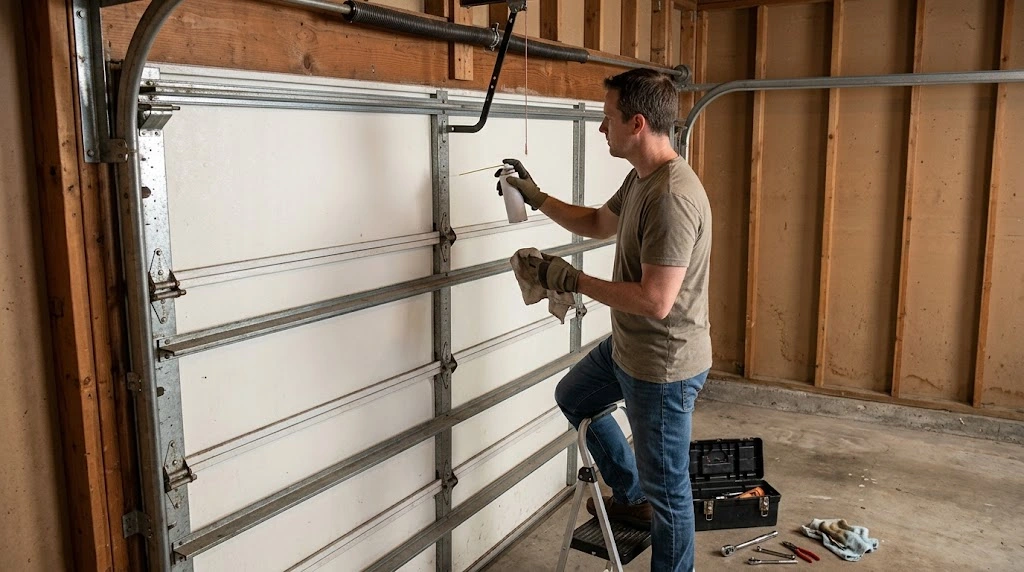
Lubricating a noisy garage door correctly means applying the right garage door lubricant to specific moving parts on a consistent, regular schedule, not spraying everything in sight without a plan. A proper routine keeps most noise issues from loose hardware or dry parts from ever requiring a professional garage door repair.
Different parts of the garage door system need different products, and a few parts should never be lubricated at all, since lack of lubrication is not always the actual cause behind every sound. This guide breaks down exactly where, how, and how often each part of the system needs attention throughout the year.
Key Takeaways
- Hinges, springs, and metal rollers all benefit from a silicone or lithium-based lubricant
- Nylon rollers should never be lubricated, since grease attracts dust and grit
- Regular garage door maintenance every few months keeps most common causes away
- Tracks need cleaning with a damp cloth rather than any lubricant at all
- The opener chain or belt needs its own separate lubrication schedule
- A consistent routine leads to quiet operation and less maintenance overall
Where and How to Lubricate a Garage Door
Different parts of the garage door system react differently to lubricant, and knowing which product goes where prevents wasted effort and unusual sounds.
The table below breaks down what each part needs and how often it needs attention:
| Part | Lubricant Type | How Often |
| Hinges | Silicone or lithium-based spray | Every 3 to 6 months |
| Rollers (metal) | Silicone or lithium-based spray | Every 3 to 6 months |
| Rollers (nylon) | None | Never |
| Springs | Lithium grease | Every 6 to 12 months |
| Track | None, clean only | Every 3 to 6 months |
| Opener chain or belt | Chain drive lubricant | Every 6 to 12 months |
Hinges
Hinges take on constant motion with every open and close, and dry hinges are behind most squeaking a garage door produces.
The right approach for hinges looks like this:
- Wiping old grease near mounting brackets with a damp cloth first
- A basic socket set helps tighten any bolts loosened during regular maintenance
- Applying a few drops of silicone or lithium-based spray to each pivot point
- Working the door through a full cycle to spread the lubricant evenly
- Repeating this process every three to six months for consistent results
To try each of these repairs step by step and stop the noise for good instead of guessing at the cause, read our guide on Steps to Stop a Garage Door From Making Noise, which covers each fix in full detail.
Rollers
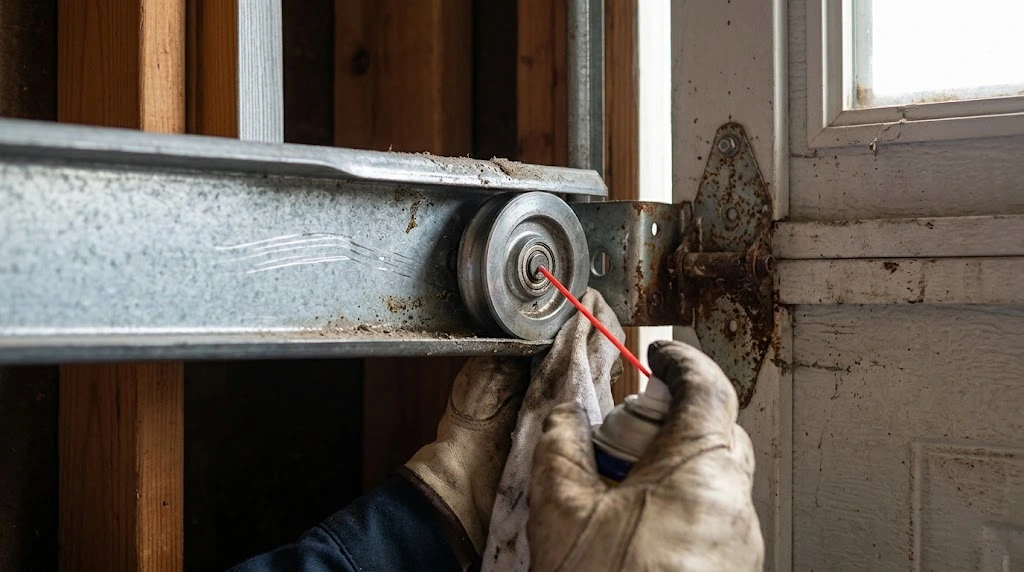
Metal rollers and garage door rollers benefit from the same lubricant used on hinges, but nylon rollers are a notable exception many homeowners get wrong.
Roller lubrication works best in this order:
- Applying lubricant only to metal rollers, never to nylon ones
- Spraying directly into the roller bearing rather than the outer surface
- Wiping excess lubricant off the roller’s outer edge to avoid buildup
- Checking roller brackets for wear at the same time lubricant is applied
- Replacing any roller that still grinds despite fresh lubrication
To hear exactly what a dry or worn roller sounds like before reaching for the lubricant, read our guide on What Kind of Noise Is a Garage Door Making?, which breaks down each sound and its likely cause.
Springs
Torsion and extension springs carry the door’s full weight under extreme tension, making a spring in poor condition a serious injury risk.
Handle the spring coil with this process:
- Applying lithium grease along the full length of the coil
- Working the grease in gradually rather than applying one heavy coat
- Avoiding any spring showing early warning signs like rust, gaps, or water damage
- Never attempting to lubricate a spring that already looks compromised
- Scheduling spring replacement with a trained technician if damage is present
To understand why a spring in poor condition creates such a distinct and alarming sound, read our guide on Why Is My Garage Door So Loud? Common Causes Explained, which covers every major noise source in full detail.
Track
The track guides the door’s rollers through every cycle, and unlike most other parts, it needs cleaning rather than lubricant to avoid further damage.
Cleaning the track properly involves:
- Wiping the inside of the track with a damp cloth regularly
- Removing dust and spider webs collecting near the track walls
- Checking for rust or corrosion along the metal surface
- Avoiding any lubricant, since grease on the track attracts more dirt
- Inspecting for track alignment issues while cleaning is already underway
Persistent wear beyond simple dirt buildup on the track sometimes calls for a full garage door installation instead of continued cleaning alone.
Opener Chain or Belt
The chain drive or belt needs a different lubricant than the rest of the mechanism, since standard grease can gum things up.
The chain responds well to this routine:
- Using a lubricant made specifically for chain drives, not general grease
- Applying it evenly along the full length of the chain or belt
- Listening for a loud bang or opener sound before and after lubrication
- Watching closely for opener issues that lubrication alone will not resolve
- Checking chain tension at the same time lubricant is applied
A chain that still hums or strains after lubrication may point to a deeper garage door opener issue rather than a simple lubrication gap.
Locks and Manual Release
The manual release and exterior locks see far less use than other metal parts, but neglecting basic upkeep here can lead to stiffness over time.
Cover this area using this checklist:
- Applying a small amount of lithium grease to the release mechanism
- Watching for any unbalanced door movement while testing the release mechanism
- Testing the manual release to confirm smooth, quiet operation afterward
- Checking exterior locks for stiffness during the same maintenance visit
- Reconnecting the opener fully after testing the manual release
A stiff manual release near a worn garage door panel may need a broader inspection that goes beyond simple lubrication alone.
How Often to Repeat This Routine
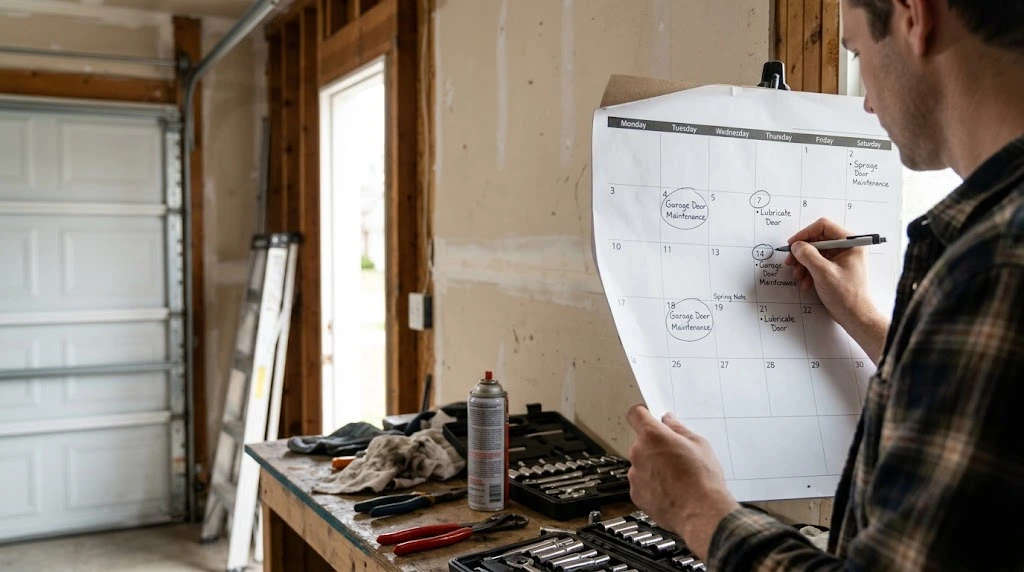
A single lubrication session rarely lasts all year, and a few factors determine exactly when the whole routine needs to happen again.
The right frequency depends on a few key factors:
- Hinges and rollers need attention every three to six months
- Springs and the opener chain hold up for six to twelve months
- Homes with daily use may need lubrication closer to the three-month mark
- Doors used only occasionally can often stretch closer to the six-month mark
- Extreme summer heat or winter cold can shorten this timeline either way
Following a consistent seasonal schedule protects the life of a garage door and keeps most noise problems from returning between one maintenance visit and the next.
A Simple Routine Keeps a Garage Door Running Quietly
Knowing exactly where and how to apply lubricant makes the real difference between a quiet garage door and one that develops a new warning sign within just a few weeks. The right product on the right part, applied consistently, handles most causes of garage door noise before costly repairs or bigger problems ever start.
MF Solutions builds a lubrication routine for homeowners throughout Niles, IL, backed by real expert advice and tailored to how often a specific door is actually used. Contact us or give us a call today, and let our team show exactly which parts need attention first, along with the schedule that keeps them that way.
Frequently Asked Questions
Can WD-40 be used on a garage door?
Standard WD-40 is not recommended for most garage door parts, since it attracts dust and dirt rather than repelling it long term. A silicone or lithium-based product designed for garage doors works far better.
Why should nylon rollers never be lubricated?
Nylon rollers are designed to run dry, and adding lubricant only attracts grit that speeds up wear rather than preventing it. Metal rollers are the only type that actually benefits from regular lubrication.
How often should a garage door be lubricated?
Homeowners benefit from lubrication every three to six months, though the spring coil and opener chain can often go slightly longer between applications. Squeaking or grinding sooner than expected usually means it is time again.
What happens if too much lubricant gets applied?
Excess lubricant attracts more dust and debris than it prevents, sometimes creating diy fixes that make the noise problem worse instead of better. Wiping away any drips or excess right after application avoids this minor issue turning into a bigger repair.
Can lubricating the track cause more noise instead of less?
Yes, lubricant on the track attracts dirt and debris that can actually increase friction rather than reduce it. Cleaning the track with a damp cloth is the correct approach instead.
Is it safe to lubricate the spring without professional help?
Lubricating an intact spring that shows no visible damage is generally safe, though any spring with rust, gaps, or wear should be left to a trained technician. The tension involved makes caution the safer choice.
Does the opener chain need a different lubricant than the rest of the door?
Yes, the opener chain or belt needs a lubricant made specifically for chain drives rather than the silicone or lithium spray used elsewhere. Using the wrong product can gum up the mechanism over time.
How long does a full lubrication routine take?
A full routine covering hinges, rollers, springs, and the opener chain typically takes twenty to thirty minutes for most homeowners. Skipping steps to save time often means repeating the process sooner than expected.
What signs mean the lubrication routine needs to happen again?
A returning squeak or grind, visible dust buildup on treated parts, or roughly six months passing since the last application are the clearest signs. Following a seasonal schedule usually prevents these signs from appearing at all.