
Declining a garage door repair offer is sometimes the safest financial decision available, especially once a company shows signs of dishonesty that go beyond a simple misunderstanding. Knowing exactly which signs justify that decision protects against both a bad repair and a worse financial outcome down the line.
Five specific signs point clearly toward ending the conversation instead of continuing it, regardless of how far the visit has already progressed. This guide breaks down what each sign looks like, why it matters, and what to do once the decision to walk away feels right, before any final payment changes hands.
Key Takeaways
- Refusing to provide written documentation signals a company avoiding accountability.
- Demands that escalate mid-repair often indicate a bait-and-switch pattern.
- Evasive answers to direct questions rarely improve with more pressure.
- Threats or intimidation tactics have no place in a legitimate repair visit.
- Unlicensed technicians carry no real accountability if something goes wrong.
Signs It Is Time to Walk Away From a Repair Offer
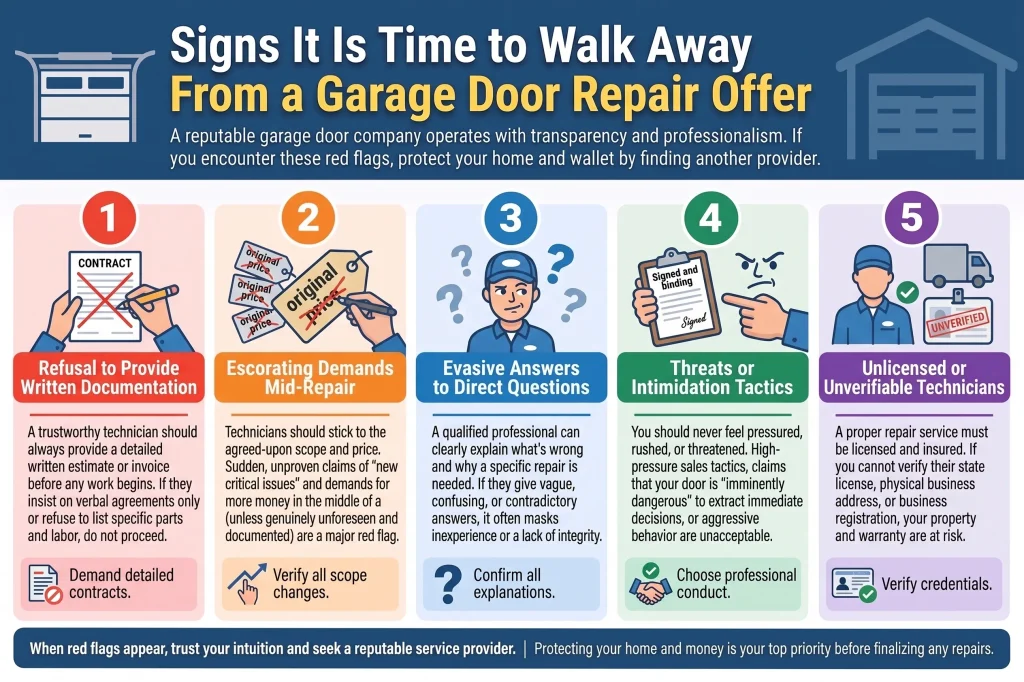
Trust erodes gradually in most scams, and a homeowner who pays attention to early behavior rarely gets caught off guard later.
| Sign | What It Looks Like | Why It Matters |
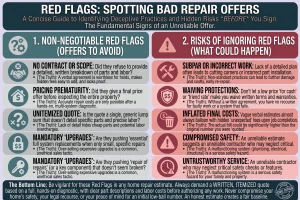
| Refusal to Provide Written Documentation | No written estimate offered, even after a direct request | Removes any record to dispute charges later |
| Escalating Demands Mid-Repair | The scope or price grows significantly once work starts | Often signals a bait-and-switch pattern from the start |
| Evasive Answers to Direct Questions | Vague or shifting responses to simple, direct questions | Suggests the company has something to hide |
| Threats or Intimidation Tactics | Aggressive language used to force a quick decision | Has no place in a legitimate repair conversation |
| Unlicensed or Unverifiable Technicians | No proof of licensing, insurance, or business registration | Removes legal accountability if something goes wrong |
Trusting a gut feeling matters, but pairing it with a documented pattern makes the decision to walk away far easier to justify.
Refusal to Provide Written Documentation
Legitimate companies provide a written estimate without hesitation, since documentation protects both sides of the transaction.
These documentation gaps tend to appear together:
- No written estimate offered before work begins.
- Verbal promises with no paper trail to reference later.
- Refusal to itemize parts and labor, even for a simple garage door spring repair.
- No invoice provided once the repair finishes.
- Resistance to putting warranty terms in writing.
Requesting documentation upfront filters out most companies unwilling to stand behind their own pricing, long before any money actually changes hands.
Escalating Demands Mid-Repair
Prices tied to a full garage door replacement sometimes climb sharply once a technician is already partway through the job.
This pattern tends to unfold in a specific, repeated sequence:
- An initial quote that seemed reasonable during the first call.
- Additional problems discovered only after work has started.
- A new total presented with no itemized explanation.
- Pressure to approve an opener replacement instead of a smaller fix.
- Refusal to pause the job for a second opinion.
To trace exactly how this pattern connects to the pricing tactics scammers rely on most, read our guide on The Importance of a Second Opinion on Garage Door Repair, which covers why comparing quotes early prevents this exact situation.
Evasive Answers to Direct Questions
Straightforward questions about parts, pricing, or licensing deserve straightforward answers, not a shifting or vague response.
These evasive patterns tend to repeat across questionable estimates:
- Changing the subject when asked about specific costs.
- Vague explanations that never name a specific part or cause.
- Answers that contradict something said earlier in the conversation.
- Refusal to repeat an answer when asked a second time.
- Deflecting questions toward urgency instead of addressing them directly.
Comparing these evasive answers against documented warning signs confirms whether the pattern matches known scam behavior.
Threats or Intimidation Tactics
Aggressive language used to force an immediate decision has no place in a legitimate repair conversation, regardless of how urgent the issue feels.
These intimidation tactics tend to escalate in a predictable way:
- Raised voices or aggressive body language during a disagreement.
- Threats about worsening damage if the repair gets declined.
- Refusing to leave the property until a decision gets made.
- Framing a routine issue as one of several garage door emergencies to justify pressure.
- Warnings that a discounted rate disappears the moment the door closes.
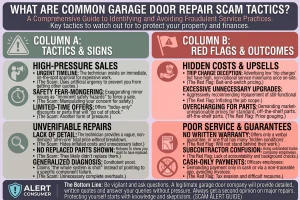
To trace how these pressure tactics fit a broader pattern across the industry, read our guide on What Are Common Garage Door Repair Scam Tactics?, which explains why aggression works so well on an unprepared homeowner.
Unlicensed or Unverifiable Technicians
Comparing a technician’s credentials against publicly available licensing records confirms whether the company is actually authorized to perform the work.
These verification gaps tend to appear together:
- No proof of a current, valid contractor license.
- No documentation of liability insurance coverage.
- Inability to confirm the technician’s affiliation with the company.
- No verifiable business address separate from a service area.
- Reluctance to provide any business registration information, even when the parts themselves look durable.
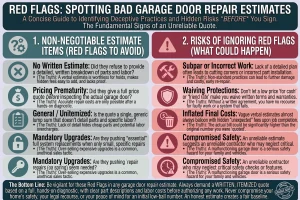
To confirm exactly what documentation actually proves a technician’s legitimacy before approving anything, read our guide on Red Flags That Appear in a Garage Door Repair Estimate, which covers the specific credentials worth checking first.
How to Find a Trustworthy Company After Declining an Offer
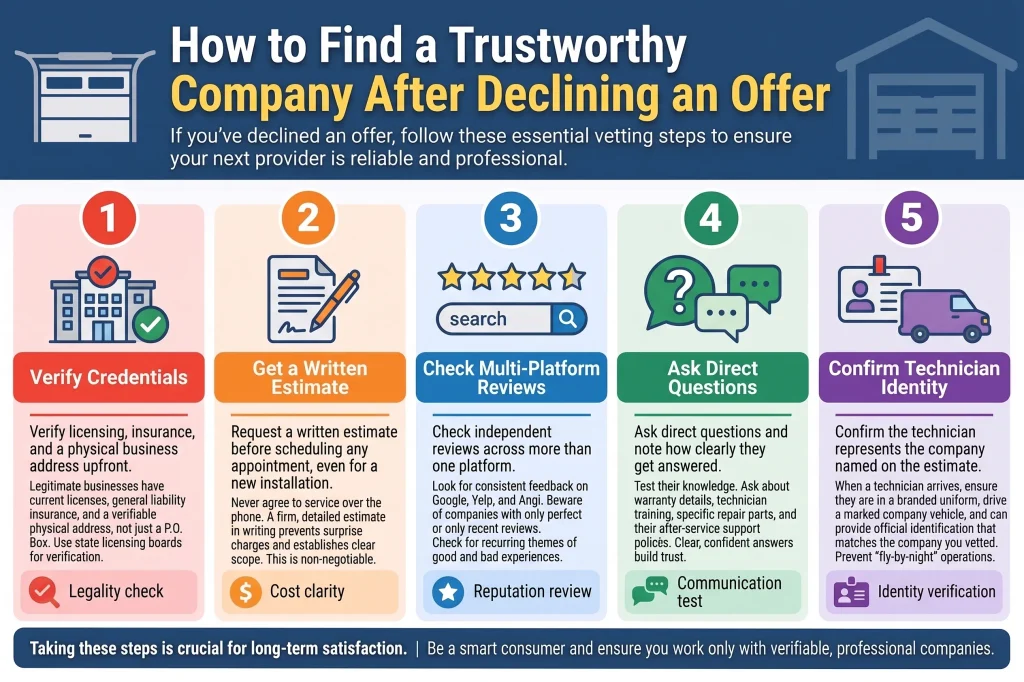
Searching for a replacement after declining a garage door installation or repair offer works best when the same standards apply from the start.
Few steps help identify a trustworthy company on the next call:
- Verify licensing, insurance, and a physical business address upfront.
- Request a written estimate before scheduling any appointment, even for a new installation.
- Check independent reviews across more than one platform.
- Ask direct questions and note how clearly they get answered.
- Confirm the technician represents the company named on the estimate.
Applying these standards from the first phone call brings genuine peace of mind and prevents a repeat of the same situation.
Walking Away Protects Both the Budget and the Repair Outcome
Declining a repair offer is rarely the wrong call once a pattern of dishonest behavior becomes clear, even if the door still technically needs attention. Protecting the household budget and the safety of everyone using the door matters more than finishing a rushed, uncertain job with an untrustworthy company.
MF Solutions works with homeowners throughout Niles, Illinois to provide honest, documented estimates from the very first visit, without any pressure to decide on the spot. Contact us or give us a call today, and let our trained team earn the job through transparency instead of pressure, one clear answer at a time.
Frequently Asked Questions
What if a technician already started the repair?
Pausing an unfinished repair to get a second opinion is reasonable, even if some work has already begun. Most garage door opener repair situations can tolerate a short delay without further damage.
Does declining an offer leave a homeowner without a working door?
A door left partially repaired can usually still function safely for a short period while a second company gets scheduled. Requesting the technician secure the door before leaving addresses most immediate safety concerns.
How can homeowners verify licensing on the spot?
Requesting a license number and checking it against a state database usually confirms legitimacy within a few minutes. A technician confident in their credentials typically provides this information without hesitation.
Is walking away ever a mistake if the price seems fair, even for a new garage door?
A fair price alone does not offset warning signs like evasive answers or missing documentation. Declining an offer based on behavior, not just pricing, protects against issues that surface after payment.
What should a homeowner say when declining an offer?
A brief, direct statement declining the offer is usually enough, without needing to justify the decision at length. Ending the conversation calmly avoids escalating an already tense situation.
Can a homeowner request a refund after declining mid-repair?
Requesting a refund for any prepaid amount is reasonable if work has not been completed as agreed. Documentation of the original estimate supports this request if a dispute arises later.
Does every escalating price indicate a scam?
Some price increases reflect genuinely unexpected findings, like a broken spring discovered once other components, including the garage door openers themselves, get inspected. The difference lies in whether the company explains the increase clearly and provides documentation.
How quickly should homeowners expect a licensing answer?
Legitimate companies typically provide licensing information immediately, since this documentation stays on file for every job. Significant delays or repeated deflection on this question is worth treating as a warning sign.
What role do sensors and other moving components play in these decisions?
Small, moving components like sensors rarely justify the kind of pressure or escalating demands tied to a full system replacement. A technician pushing hard on a minor, inexpensive fix deserves the same scrutiny as a larger job.