
Checking garage door opener size before buying starts with measuring the door’s width, height, weight, and available overhead space to find the opener that fits and performs correctly. Getting these measurements wrong leads to motors that strain, rails that do not fit, and doors that never operate the way they should.
Every opener on the market is built around specific door dimensions, weight limits, and space requirements that must match the garage before anything is installed. Confirming those numbers in advance is the most critical step in making an informed purchase decision and avoiding wasted time and money.
Why Does Knowing Garage Door Opener Size Matter Before Buying?
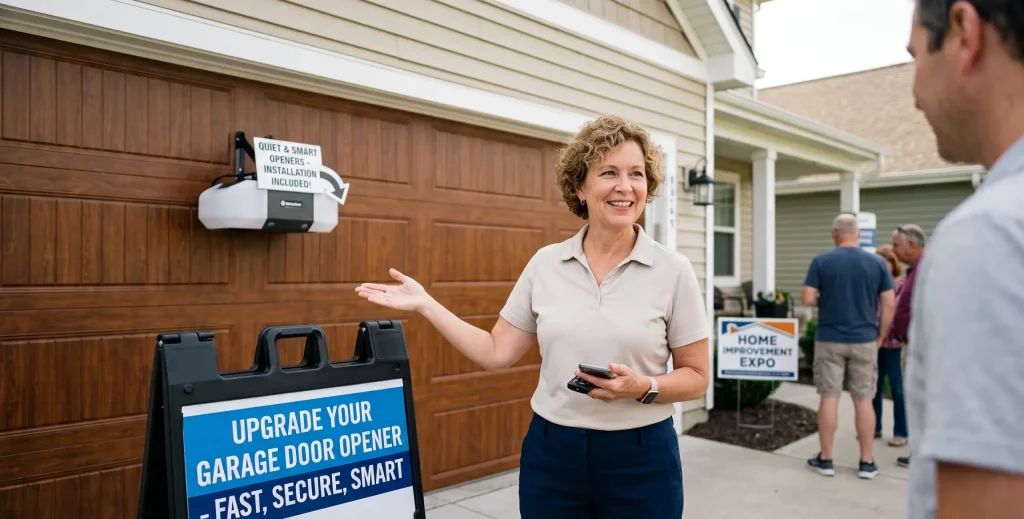
An opener that does not match the door’s weight and dimensions will strain the motor on every cycle, wear out components prematurely, and deliver inconsistent performance from the first day of use.
Key reasons to check garage door opener size before buying include:
- Undersized motors burn out from lifting beyond their rated capacity
- Mismatched rail length causes track misalignment and uneven door travel
- Insufficient overhead clearance prevents the opener from fitting in the garage
- Wrong sizing puts excess stress on the spring system and accelerates wear
- Incorrect units get returned and delay the entire installation process
To explore how door dimensions and weight requirements relate to opener specs, read our guide on What Size Garage Door Opener for a Double Door?, which explains how to match the right opener to the door’s load and width.
What Affects Garage Door Opener Size
Getting the garage door opener size right depends on the physical and structural factors that determine how much power and space the opener needs.
Key factors that affect garage door opener size include:
- Door width and height set the baseline dimensions for the opener and rail
- Door weight determines the minimum horsepower the motor needs
- Door material impacts overall load since solid wood and insulated doors weigh more than aluminum doors
- Single and double-door configurations require different horsepower thresholds
- Headroom, side room, and backroom space limit that determines which opener models physically fit
To break down how horsepower ratings align with door weight and size, read our guide on Garage Door Opener Size vs. Horsepower: What Matters?, which covers how power output connects to long-term performance across different door types.
How to Check Garage Door Opener Size
Measure Door Width and Height
Door width and height are the first numbers that determine which opener and rail length are compatible with the garage.
Measurements to take for door width and height include:
- Width runs from the inside left edge to the inside right edge of the door opening
- Height runs from the floor to the top of the door opening
- Standard single doors measure 9 by 7 feet in most residential garages
- Standard double doors measure 16 by 7 feet in most residential garages
- Exact figures must be recorded before comparing any opener specs
Width and height are the two numbers that every other garage door opener sizing decision is built around.
Assess Door Weight and Material
Door weight and material determine the minimum horsepower required for the motor to lift the door without strain.
Weight and material factors to evaluate include:
- Steel doors weigh between 130 and 200 pounds, depending on thickness
- Aluminum doors fall below 100 pounds and work with standard horsepower motors
- Solid wood doors exceed 300 pounds and need higher horsepower motors
- Insulated steel doors add 20 to 50 pounds over non-insulated versions
- Manufacturer spec sheets provide the most accurate door weight figure
During a garage door replacement, the door’s weight and material are the most direct indicators of the horsepower rating required for the new opener.
Check Overhead Clearance and Headroom
Headroom above the door determines whether a standard opener track fits or a specialty system is needed.
Headroom measurements to confirm include:
- Standard automatic openers need at least 15 inches of clearance above the door
- Low-clearance garages with under 15 inches require specialty track configurations
- Wall-mounted jackshaft openers work in spaces where an overhead track cannot fit
- Finished ceilings and attic access points often reduce available headroom
- Measuring from the top of the door to the ceiling confirms usable clearance
Headroom is one of the most frequently missed measurements during a garage door repair visit and affects which opener models are compatible with the space.
Determine the Right Rail Length
Rail length must match the door height exactly, or the opener track will not align, and the door will not travel correctly during every cycle.
Rail length options to match against door height include:
- 7-foot rails fit standard doors with a 7-foot height
- 8-foot rails are required for doors measuring 8 feet tall
- 10-foot rails accommodate high-clearance garages with extra ceiling space
- Rail length is listed on the opener box and in the product documentation
- Buying the correct rail length upfront avoids exchanging the unit after purchase
Pairing the wrong rail length with the door height creates alignment problems that affect the opener’s performance on every single cycle.
Check Side Room and Backroom Space
Side room and backroom measurements confirm whether the opener and track system will physically fit inside the garage.
Space requirements to verify include:
- Side room needs at least 3.75 inches on each side for track mounting
- Backroom must equal the door height plus at least 50 inches for a motorized opener
- Shelves and utility pipes along the walls reduce available backroom space
- Both measurements must be confirmed before purchasing any opener model
- Tight backroom dimensions may require a compact opener configuration
Undiscovered space conflicts after purchase can easily turn a simple opener installation into an unexpected garage door emergency.
How to Read a Garage Door Opener Size Chart
A garage door opener size chart matches door dimensions and weight to the right opener specs, making the selection process faster and more accurate.
Key columns to review on a garage door opener size chart include:
- Door width and height ranges show which opener and rail length are compatible
- Weight capacity columns indicate the maximum load the motor can handle
- Horsepower columns align motor ratings with door weight and size combinations
- Drive type columns show whether the opener uses a chain drive or a belt drive
- Rail length recommendations confirm which track fits the door height listed
Reading across a single row gives a complete picture of what each opener model supports before any purchase decision is made.
Next Steps After Checking Garage Door Opener Size
Confirmed measurements turn the opener search from guesswork into a targeted process that matches the door’s exact requirements.
Key next steps after checking the garage door opener size include:
- Filter opener models by horsepower to eliminate units below the door’s weight requirement
- Confirm rail length compatibility against door height before finalizing any model
- Compare drive types since belt drive openers deliver quieter operation than chain drive
- Consider a smart garage door opener upgrade during a garage door replacement to avoid a second installation visit
- Review DC motor options for quieter and more energy-efficient daily operation
To evaluate how sizing decisions influence noise level, speed, and wear over time, read our guide on Does Garage Door Opener Size Affect Performance?, which details how the right opener size translates into measurable results in daily operation.
When to Call a Pro for Garage Door Opener Sizing
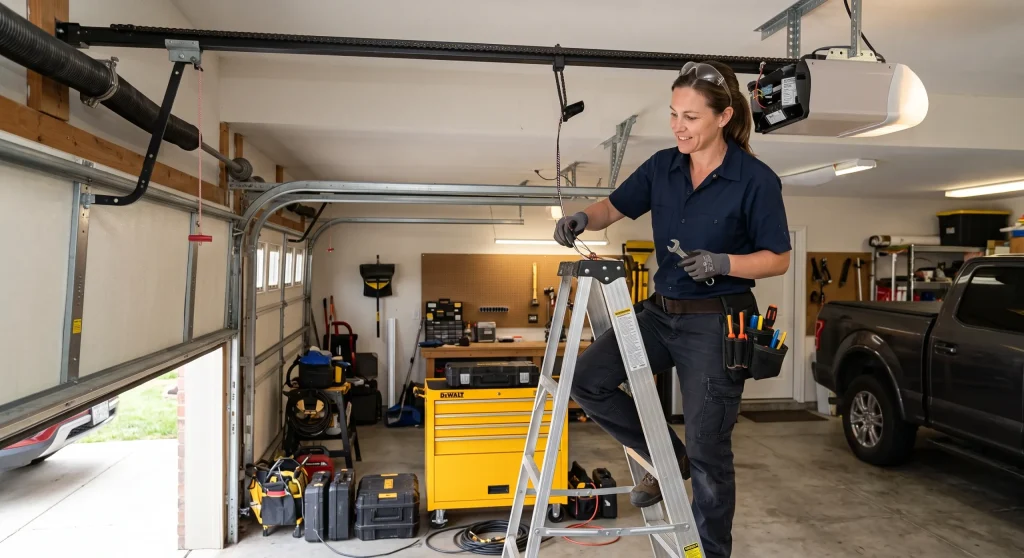
Professional garage door opener sizing help is worth pursuing when the garage has conditions that a tape measure and size chart alone cannot resolve.
Situations that call for a professional garage door opener sizing assessment include:
- Garages with less than 15 inches of headroom need specialty opener configurations
- Solid wood or reinforced steel doors need precise horsepower matching
- Non-standard dimensions from converted spaces complicate sizing calculations
- An unbalanced door must be addressed before any opener sizing begins
- A new garage door with different dimensions from the previous one needs a full remeasure
A professional assessment covers every variable that affects opener compatibility and ensures the right unit is selected before any purchase is made.
Check Garage Door Opener Size Correctly Before Making the Purchase
Knowing how to check garage door opener size before buying means measuring the door’s width, height, weight, and available space to find an opener that fits and works properly. Getting every number confirmed ahead of time leads to a smooth installation and a system that operates as it should from day one.
MF Solutions provides homeowners throughout Niles, IL, with accurate garage door opener sizing assessments and professional installation services to get the job done right the first time. Contact us or give us a call today, and let our team confirm all necessary measurements so we can match the right opener to your door.
Frequently Asked Questions
Does the opener brand affect which size fits a specific garage door?
Yes, opener brands follow different sizing conventions across their product lines. Checking the manufacturer's compatibility guide before purchasing confirms whether the unit covers the door size and weight range, regardless of brand.
Is the garage door opener horsepower the only spec that determines the right fit?
No, garage door opener horsepower is one of several specs that determine compatibility. Rail length, weight capacity, drive type, and available garage space all factor into whether an opener has enough horsepower and is the correct fit for the door.
How do headroom limitations change the sizing process?
Limited headroom eliminates standard overhead-opener configurations entirely. Garages with less than 15 inches of clearance require wall-mounted or low-clearance systems, and choosing the right size opener for these spaces depends on the available specialty configuration rather than standard sizing charts.
Does the opener rail need to be replaced when upgrading to a larger unit?
Yes, the rail often needs to be replaced when upgrading to a different opener size. Rail length and drive type compatibility vary across models, and reusing an incompatible rail can affect track alignment and the door's smooth operation on every cycle.
What is the minimum side room needed to install a garage door opener for double door setups?
A garage door opener for double door setups requires at least 3.75 inches of side room on each side of the opening for proper track mounting. Wider double door openings do not change the side room requirement, but the additional weight of your garage door does affect the horsepower rating needed.
Can the same opener model work across different door heights?
No, opener models are paired with specific rail lengths that correspond to door height. A unit designed for single garage doors at 7 feet requires a different rail than one for an 8-foot door, and using the wrong rail length can affect alignment during operation.
How does backroom space affect which opener model fits the garage?
Backroom space determines whether the opener track has enough room to extend fully behind the door when open. A garage that falls short of the door height plus 50 inches of backroom space limits which opener models can be installed, making it harder to find the right garage door opener for the layout.
Does converting a single bay to a double bay require a full opener resize?
Yes, converting from a single bay to a double bay requires a complete reassessment of opener size. The increase in door width and load means that heavier doors require a more powerful opener than was sufficient for the previous single-bay configuration.
What role does the drive type play when checking garage door opener size?
Drive type affects noise levels, maintenance needs, and weight-handling capacity. Chain drive openers handle heavy doors at a lower cost, while belt drive openers offer quiet operation and suit moderate weight ranges, making drive type a key part of the sizing decision alongside horsepower and rail length.