
The size of the garage door opener directly affects performance because the motor’s horsepower must match the door’s weight and width. Choosing the wrong size forces the motor to overwork on every cycle, accelerating mechanical wear and shortening the lifespan of the entire system.
Horsepower is the standard metric for determining how much load a garage door opener can handle without straining internal components. Accurately matching that rating to the door’s actual weight and dimensions determines whether an opener runs consistently for years or starts failing within months.
What Happens When an Opener Is the Wrong Size?
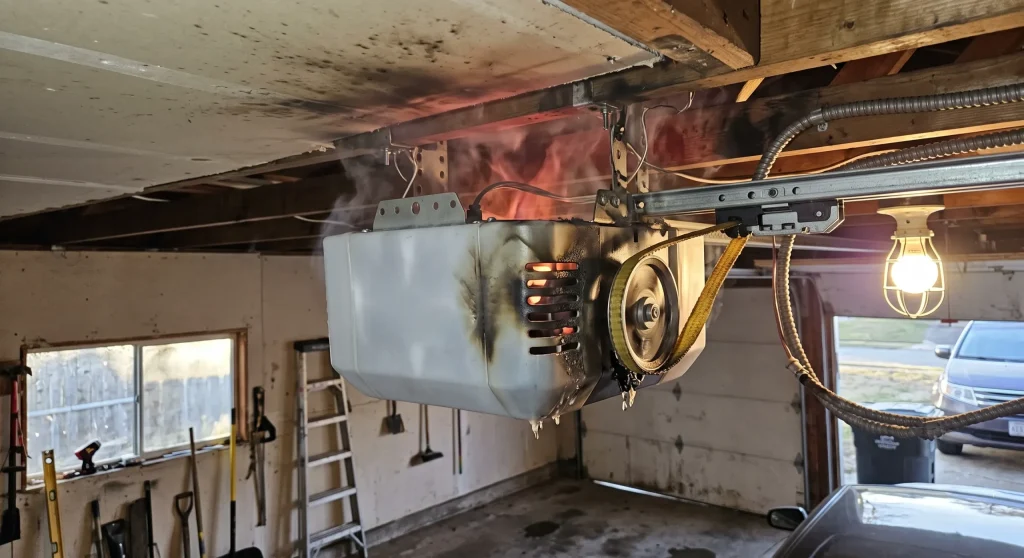
An incorrectly sized opener strains the motor on every cycle, wears down internal components faster than expected, and creates performance problems that compound with every use over time.
Common consequences of a mismatched opener size include:
- Motor overheats from drawing more power than its rating allows
- Internal gears strip out faster when lifting beyond rated capacity
- Door movement becomes inconsistent, hesitating, or reversing unexpectedly
- Noise levels increase as the drive system absorbs excess motor strain
- Auto-reverse fails to trigger correctly under overloaded motor conditions
To understand how each part responds to a mismatched motor, read our guide on How to Check Garage Door Opener Size Before Buying, which explains how internal components react when the opener size does not match the door.
Common Garage Door Opener Sizes and What They Cover
Knowing the standard horsepower ratings available helps narrow down the correct garage door opener size before making a purchase or installation decision.
| Horsepower | Best For | Door Type |
| 1/3 HP | Lightweight single-car doors | Aluminum or thin, uninsulated steel |
| 1/2 HP | Standard single-car doors | Steel with minimal insulation |
| 3/4 HP | Heavier single or double-car doors | Insulated steel |
| 1 HP and above | Heavy or oversized doors | Solid wood, custom, or wind-rated panels |
To match these horsepower ratings to actual door weight and dimensions, read our guide on What Size Garage Door Opener for a Double Door?, which covers how door width and load requirements determine the correct opener for any installation.
How Garage Door Opener Size Determines Performance
Underpowered Openers and the Damage They Cause
Running a motor below the door’s weight requirement puts every internal component under stress it was never rated to handle.
Common damage patterns from underpowered openers include:
- Motor burns out faster from exceeding its rated load on every cycle
- Internal gears strip out under repeated overload conditions
- Door speed slows as the motor struggles to complete each lift
- Grinding sounds develop as the drive system absorbs excess strain
- Auto-reverse weakens when the motor cannot detect resistance accurately
Underpowered motors push every connected component toward garage door repair long before the opener reaches the end of its expected lifespan.
Correctly Powered Openers and Consistent Operation
Matching the garage door opener size to the door’s weight allows the motor to complete each cycle without excessive strain on the drive system.
Benefits of a correctly matched opener include:
- Cycle speed stays consistent within the motor’s rated capacity
- Belt and chain components wear less when the load is distributed correctly
- Auto-reverse triggers accurately because the motor responds to resistance correctly
- Energy consumption stays lower when the motor draws only what the door needs
- Fewer mechanical adjustments are needed over the opener’s lifespan
Proper sizing protects every connected component and keeps the system running smoothly until garage door replacement becomes necessary.
Overpowered Openers and the Risks They Carry
Installing a motor far above the door’s weight requirement creates mechanical stress at the opposite end of the spectrum.
Risks that come with an oversized opener include:
- The door accelerates faster than the track hardware is designed to handle
- Hinges and brackets absorb more force than their rated tolerance allows
- Track alignment shifts under repeated aggressive open and close cycles
- Stopping distance increases when the motor overpowers the door’s momentum
- Hardware fatigue develops faster despite the door appearing to operate normally
Oversized motors impose hidden stress on hardware that can escalate into a garage door emergency over hundreds of aggressive open-and-close cycles.
Why Opener Size and Door Specs Must Work Together for Peak Performance
Opener size and door specs must align, and a mismatch between the two creates mechanical strain across every connected component.
Key reasons opener size and door specs must align include:
- Motor horsepower must match door weight to avoid overloading the drive system
- Drive type selection depends on both ceiling clearance and door load requirements
- Insulation thickness adds to total door weight and pushes horsepower requirements higher
- Double doors carry significantly more load and demand a higher-rated motor
- Worn springs increase the effective load the motor handles on every cycle
To explore how horsepower ratings and door specifications connect, read our guide on Garage Door Opener Size vs. Horsepower: What Matters?, which breaks down how each variable influences the other during selection and installation.
Signs an Opener Size Is Hurting a Door’s Performance
A mismatched opener size produces warning signs that show up in how the door moves, sounds, and responds during every cycle.
Common signs that an opener size is hurting a door’s performance include:
- The door hesitates or slows noticeably mid-cycle
- Motor produces grinding or straining sounds during operation
- The door reverses without any obstruction, triggering the auto-reverse
- Opener trips the thermal overload switch after repeated cycles
- Hardware shows premature wear despite regular maintenance
Scheduling a professional assessment after noticing any of these patterns helps prevent the problem from progressing.
How Professional Garage Door Opener Sizing Protects Long-Term Performance
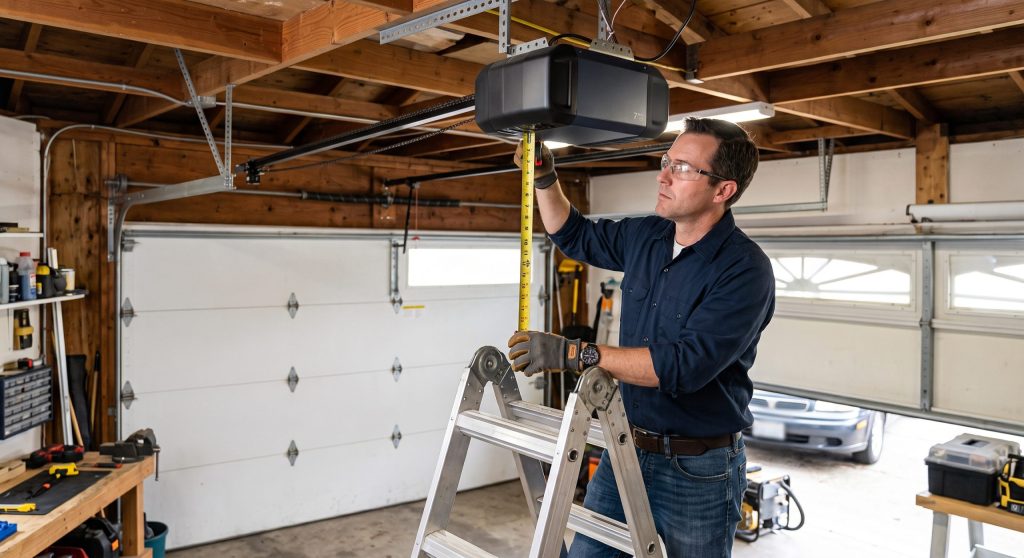
Professional sizing evaluates every factor that affects how well the opener and door perform together over the long term.
What a professional garage door opener sizing assessment covers:
- Door weight is measured accurately to match the correct horsepower rating
- Spring tension is checked before any opener recommendation is made
- Drive system type is selected based on door load and noise tolerance
- Track and hardware condition are inspected for resistance that affects motor load
- The opener model is matched to the door’s specific weight and dimension requirements
Getting the garage door opener size right through a professional assessment protects every component and extends the full system’s operational life.
Get the Right Opener Size and See the Performance Difference
Garage door opener size directly affects how well a door performs, and matching the right horsepower to the door’s weight and width keeps the entire system running at its best. Every component connected to the opener lasts longer, operates more consistently, and requires fewer adjustments when the sizing is accurate from the start.
MF Solutions takes the guesswork out of garage door opener sizing by evaluating every door spec, motor rating, and drive system requirement for homes and properties across Niles, IL. Contact us or give us a call today to schedule a professional opener sizing assessment and get the consistent performance the door was built to deliver.
Frequently Asked Questions
Does the garage door opener horsepower affect how quietly the door operates?
Yes, garage door opener horsepower directly influences noise level during operation. An HP opener matched to the door's weight runs without straining the drive system, which produces quiet operation on every cycle.
Can an undersized opener damage the door itself?
Yes, an undersized opener places stress on the door panels, hinges, and brackets over time. The motor's inability to lift heavier garage doors smoothly causes uneven movement, accelerating wear on hardware throughout the entire door system.
How does opener size affect the auto-reverse safety function?
A motor operating beyond its rated capacity struggles to detect resistance accurately, weakening the auto-reverse response. Appropriate horsepower ensures the motor responds to obstruction triggers correctly, resulting in smoother operation on every cycle.
What size garage door opener do I need if the door has been modified or reinforced?
After a modification, the correct opener size depends entirely on the new door's weight. Adding reinforcement panels, bracing, or different materials increases the total load and may push the door into a higher horsepower requirement.
Is a garage door opener size chart useful for older or non-standard doors?
Yes, a garage door opener size chart is particularly helpful for older or non-standard doors where manufacturer specs are no longer available. Matching the right-sized garage door opener to the measured door weight using a sizing chart yields a more accurate result than estimating based on door age or appearance.
How does opener size affect performance on a garage door opener for double door installations specifically?
A garage door opener for double door installations requires higher horsepower because the motor handles the average weight of double doors on every cycle. Running less power on heavy garage doors accelerates wear and produces inconsistent performance from the start.
At what point does poor performance indicate a need for garage door opener replacement?
Garage door opener replacement becomes the practical option when the motor fails repeatedly or the opener no longer handles the specific needs of the door consistently. Persistent performance issues after servicing are the clearest signal that a new garage door opener is the better path forward.
Can upgrading to a smart garage door opener affect how well the door performs?
Yes, a smart garage door opener with smart features, paired with the right horsepower rating, improves both performance and daily convenience. Smart garage door systems with DC motors and variable-speed settings deliver smoother, quieter operation than older fixed-speed units.
Does opener size affect how well the door performs during high-cycle use?
Yes, a right size garage door opener handles high-cycle use without accelerating wear on internal components. An undersized opener operating on heavy doors wears out faster with frequent use because each cycle pushes the motor closer to its load limit.